5 Foolproof Strategies to Keep Container Plants From Tipping Over for Guaranteed Success
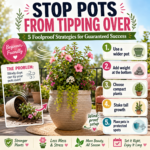
To keep container plants from tipping over is the ultimate goal of every small-space gardener dealing with summer storms and windy balcony weather. There is a very specific type of heartbreak that happens when you walk out to your patio and see your beautiful tomato or pepper plant lying sideways, with soil spilled everywhere and a snapped main stem.
Disclosure: This post contains affiliate links. If you use these links to buy something, I may earn a commission at no extra cost to you. This helps support the blog and keeps the garden growing!
If you are a beginner who has struggled to keep a houseplant alive in the past, this kind of outdoor disaster can make you feel like you just do not have a green thumb. Please know that this is not your fault, and it is a completely fixable problem.
The issue comes down to a simple rule of physics known as the sail effect. As your vegetables grow tall and bushy, their leaves catch the wind just like a sail on a boat. When you place that big sail into a lightweight plastic pot filled with fluffy potting soil, the whole setup becomes incredibly top-heavy. Learning how to keep container plants from tipping over is one of the most valuable skills you can develop as a small-space gardener.
Quick Fixes to Keep Container Plants From Tipping Over Right Now
If your plants are tipping right this second and you need to save them immediately, use these fast, actionable steps before reading any further:
-
Move to a Wind Shadow: Slide the vulnerable pots directly into a corner where two walls meet or place them completely flush against a solid building wall.
-
Water Generously: Give your plants a thorough watering right now. Dry soil is light as a feather, but wet soil adds instant ballast weight to the base.
-
Use a Temporary Clamp: Find any heavy household object—like a concrete cinder block, a gallon jug filled with water, or a heavy workout dumbbell—and press it firmly against the bottom of the plastic pot to lock it in place until the wind dies down.
Why Do Potted Plants Keep Falling Over?
You are likely asking yourself, “Why do my potted plants keep falling over?” The answer lies in your container’s center of gravity, which is simply the point where an object’s weight is concentrated.
Traditional gardening advice tells you to use lightweight potting mixes for good drainage. While that is great for roots, it is terrible for stability.
When a tomato or pepper plant reaches 3 to 5 feet tall, the weight of the foliage and wet fruit vastly outbalances the weight of the root zone. A dry, lightweight plastic pot acts like a pendulum waiting to swing. To fix this, you must artificially alter the plant’s center of gravity or anchor it to something immovable.
5 Expert Methods to Keep Container Plants From Tipping Over Permanently
Once you have survived the current breeze, you can use these five universal, expert-backed strategies to permanently secure your small-space garden.
1. Add Internal Ballast to Shift the Center of Gravity
To counter a high center of gravity, you need to add dense weight to the bottom of your standalone lightweight container before you even think about adding dirt.
When setting up your pot, fill the bottom 2 to 3 inches with heavy river stones, lava rocks, or real clay bricks. This dramatically lowers the center of gravity, ensuring that even when the foliage grows massive, the base remains safely anchored to the ground.
2. Structural Tethering for High-Rise Balconies
If you are wondering how to secure tall plants in containers on a high-rise apartment balcony, you can use your building’s existing architecture to your advantage.
Place your pots directly against your balcony railing. Then, wrap heavy-duty, automotive ratchet straps, bungee cords, or thick industrial zip-ties around the middle of the pot or around the plant’s metal support cage, securely locking it to the metal bars of the railing. If your building’s railing does not move, your plants will not either.
3. The “Pot-in-Pot” Sleeve System
Lightweight plastic pots are fantastic for beginners because they are highly budget-friendly, easy to carry up apartment stairs, and excellent at holding moisture. However, they are often too light to stand up to heavy gusts.
To use this method, buy a beautiful, heavy outer pot made of concrete, cast stone, or thick terracotta that is about 2 inches wider than your plastic liner. Place a few flat rocks at the bottom of the heavy pot, and drop your fully planted plastic pot right inside. You get the aesthetic of a premium designer garden with the unyielding wind resistance of heavy stone.
4. The “Group Hug” Layout
An isolated pot sitting by itself is an easy target for a sudden gust of wind. Instead of spreading your plants out in a single, exposed line, cluster your containers tightly together in a honeycomb or triangle shape.
Position your heaviest, widest pots on the outside perimeter facing the direction of the prevailing wind to act as a shield. Place your lighter pots safely in the middle. The leaves of all the plants will naturally interlace, creating a collective windbreak that diffuses high-velocity air currents harmlessly.
5. Pruning to Reduce the Sail Effect
The final strategy relies on simple plant maintenance. You can drastically improve airflow and learn how to stop pots from tipping in the wind by managing your plant’s shape.
Carefully snip away the lowest 12 inches of leaves and non-fruiting branches, often called suckers, from the base of your tall plants. This creates an open tunnel at the bottom of the container. Instead of acting like a solid brick wall that catches every breeze, your plant will allow high-velocity winds to pass right through the structure.
Wrong vs. Right: Visualizing a Stable Container Setup
Understanding the visual layout of a stable pot makes it much easier to keep container plants from tipping over successfully.
The Wrong Setup (High Tipping Risk): A tall, top-heavy cherry tomato plant growing in a narrow, heavily tapered, bone-dry plastic pot with a flimsy wire cage, sitting completely alone in the middle of a breezy balcony.
The Right Setup (Maximum Stability): A compact vegetable variety growing in a wide, square-based pot filled with damp, high-quality soil, weighted down with rocks at the bottom, clustered tightly with other pots, and strapped securely to a sturdy railing.
Beginner Mistakes to Avoid
As you build your patio oasis, keep an eye out for these common errors that sabotage container stability:
-
Using Narrow Pots: Never choose pots that come to a small point at the bottom, as they have zero physical stability.
-
Letting Soil Dry Out: Avoid letting your soil dry out completely during storm season. Bone-dry potting mix loses almost 80% of its physical weight, making it incredibly easy for the wind to knock over.
-
Isolating Tall Plants: Never leave a single tall plant out in an exposed, windy corner without adjacent pots to buffer the air.
-
Flimsy Support Cages: Avoid the cheap, thin, cone-shaped wire cages sold at grocery stores. They warp and bend easily, causing the plant to lean and pull the entire pot down with it.
Choose Compact Varieties to Prevent Tipping
One of the easiest ways to stop pots from tipping in the wind is to start with the right seeds. If you are growing on a windy balcony, seek out compact or dwarf plant varieties.
Plants bred specifically for patio containers, like the bush tomatoes and dwarf sweet peppers available from Botanical Interests, naturally stay short and stocky. Because they do not grow 6 feet tall, they have a naturally low center of gravity and catch significantly less wind, making them practically tip-proof from day one.
The “Smart Investor” Shopping List for Ultimate Stability
Investing in high-quality gear is another simple way to guarantee convenience and long-term success. When shopping for your patio, look for these specific tools:
-
Square Resin Pots: Choose heavy-duty, square-shaped resin pots from trusted suppliers like Perfect Plants. Square pots have wider base corners than round ones, making them inherently harder to tip over.
-
Vertical Growing Towers: If you want to skip the anxiety of individual pots entirely, upgrade to an un-tippable vertical system like the Garden Tower. Because it holds up to 50 plants in a rotating column, its massive base footprint becomes completely windproof when fully loaded with soil and water.
-
Steel Tomato Ladders: Ditch the thin wire and invest in heavy-duty steel tomato ladders that push deep into the soil and will not bend under pressure.
-
Soft Velcro Plant Tape: To attach your plant to its support, use soft Velcro plant tape instead of harsh string or wire. Velcro stretches gently and will not slice into your plant’s stem when the wind whips.
Soil Density and the Potting Mix Finder
The type of soil you use also plays a major role in your success. You need a premium organic potting mix formulated with perlite and compost, like the eco-friendly blends from Rosy Soil. A high-quality mix stays fluffy enough for roots to breathe but holds onto water weight to act as an internal anchor at the base of your pot.
To take the guesswork completely out of your garden prep, use our interactive custom generator below to get the perfect, heavy-yet-breathable soil blueprint for whatever you want to grow:
Potting Mix Finder
How the Potting Mix Finder Works (Quick Blueprints)
-
For Potted Tomatoes & Peppers: 50% Rosy Soil Mix + 20% Coarse Compost + 15% Perlite + 15% Vermiculite.
-
For Potted Trees & Patio Citrus: 40% Peat Moss + 30% Coarse Builders’ Sand (essential for heavy ballast weight) + 20% Organic Compost from Perfect Plants + 10% Shredded Bark.
-
For Cacti & Succulents: 50% Fine Pumice + 30% Coarse Sand + 20% Fine Organic Matter.
Before a Storm Checklist
When a severe weather alert pops up on your phone, you can protect your garden in less than 5 minutes by running through this quick protocol:
-
[ ] Check Soil Moisture: Give every pot a thorough drink to maximize its floor weight.
-
[ ] Relocate Light Pots: Move your lightest containers flush against the building wall or into a protected corner.
-
[ ] Inspect Railing Ties: Double-check your ties and bungee cords to ensure everything is locked down tight to your railings.
-
[ ] Deploy a Counter-Stake: If you have an exceptionally tall plant, drive a secondary wooden stake into the soil at a 45-degree angle pointing directly into the oncoming wind. This simple step creates a highly stable tripod effect inside the root zone.
Growing your own fresh food and beautiful flowers in a limited space is an incredibly rewarding journey, and a little bit of summer wind should never stand in your way. By understanding the simple physics of container gardening, making a few structural adjustments, and using the right tools, you can completely protect your hard work. You absolutely have what it takes to be a successful container gardener. Keep planting, stay confident, and watch your patio thrive.
Want to master the art of small-space food production? For more step-by-step growing tutorials, troubleshooting guides, and urban apartment inspiration, dive into our comprehensive Container Gardening Blog!
Leave a Reply