Container Gardening on Concrete: How to Stop Patio Heat From Baking Your Roots
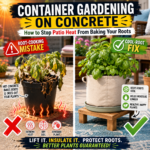
Quick Answer: Container gardening on concrete often causes plants to fail because the hard surface absorbs solar energy and conducts intense heat directly into the bottom of your pots, while nearby walls radiate infrared heat. The fastest, simplest fixes are to elevate your pots to create an insulating air gap, pull them away from reflective walls to restore airflow, and switch to light-colored or breathable containers.
Disclosure: This post contains affiliate links. If you use these links to buy something, I may earn a commission at no extra cost to you. This helps support the blog and keeps the garden growing!
You have the ultimate urban homesteading vision: a sleek apartment balcony or a cozy concrete patio lined with lush basil, vibrant patio tomatoes, and cascades of colorful flowers. You step outside with your morning coffee, ready to channel your inner green thumb with high-quality seeds from Botanical Interests.
But a few weeks in, despite watering faithfully, your plants start looking sad, yellow, and crispy.
As someone who has spent years perfecting small-space balcony gardening in intensely hot summer climates, I know the frustration of watching a promising garden wither away. It is incredibly easy to blame yourself and think you lack a “green thumb.” In reality, there is an invisible, highly destructive culprit at play that traditional advice fails to mention: the unique thermal physics of container gardening on concrete.
Here is exactly how your hardscaping is accidentally baking your plants’ roots, and the simple, high-quality fixes to ensure your concrete container garden thrives.
The Hidden Trap: The Science of Patio Heat
In a traditional backyard garden, a plant’s leaves love the sun, but its roots are buried deep underground, where the earth stays cool, dark, and damp.
When you pivot to container gardening on concrete, you completely rewrite those environmental rules. Concrete slabs and brick walls are high-density thermal masses. They act like giant solar sponges, absorbing intense shortwave heat from the sun all day long and slowly blasting it back out well into the night.
Horticultural researchers and university extension services note that when you place a standard pot directly on a hard surface, your plant gets trapped in a three-way thermodynamic crossfire:
- Conduction (From Below): The scorching concrete patio transfers heat directly into the bottom of the pot through physical contact.
- Radiation (From Behind): Adjacent brick or siding acts like a home radiator, beaming intense infrared heat into the side of the pot.
- Convection (From the Air): Stagnant, superheated air pockets build up in the corners of balconies and patios, choking the foliage.
Plaintext
Direct Sun-->[Container Plant]<--Radiant Heat from bricks
                      ^
                      |
       [Conductive Heat from Concrete Slab]
While plant leaves are built to handle a hot summer day, plant roots are incredibly sensitive. Agricultural data shows that while optimal root growth occurs between 78°F to 85°F, growth stops entirely at 100°F. Once the core soil hits 115°F—a common occurrence for black plastic pots sitting flush on concrete—root cell membranes experience irreversible thermal damage in under 30 minutes. You aren’t just growing plants; you’re accidentally slow-cooking them.
Common Beginner Mistakes That Break Your Roots
Many new gardeners fall into traps that unintentionally worsen root overheating. Are you making any of these common errors?
- Using Thin, Dark Plastic Pots: Standard black nursery pots absorb nearly all incoming solar rays and convert them into pure heat.
- Placing Pots Flush on the Floor: Setting a container directly on bare concrete establishes a direct thermal bridge for heat transfer.
- Trapping Pots in Corners: Pushing pots flush against south-facing walls or wedging them into tight corners completely cuts off the cooling breeze.
- Midday Watering: Watering during the blistering heat of the afternoon can shock the plant and warm up the water inside the pot, creating a humid, destructive environment for stressed roots.
5 Simple Steps to Cool Your Container Garden
You don’t need a degree in botany to beat the heat. You just need to implement this practical five-step sequence to break the concrete heat cycle.
1. Break the Thermal Bridge (Elevate Your Pots)
The number one rule of container gardening on concrete is to never let a pot touch bare ground. Elevate your containers using simple risers, wooden slats, or rolling caddies to build a protective air gap underneath. Because air is an excellent natural insulator, this simple gap breaks the direct transfer of conductive energy from the sizzling floor.
2. Create a Ventilation Corridor
Never push your containers flush against a brick wall or apartment siding. Keep your pots at least 6 to 12 inches away from walls. This creates a wind corridor that allows fresh air to circulate freely, sweeping trapped radiant heat away before it penetrates the pot walls.
3. Transition to Insulated Materials
Ditch the thin plastics. Transition to insulated, light-colored, or breathable containers that bounce solar energy away from the soil mass or allow for natural evaporative cooling.
4. Adjust Your Irrigation Timing
Shift your watering schedule to the early morning hours (between 4:00 AM and 6:00 AM). This charges the potting mix with cool moisture before the concrete slab begins to bake, giving the roots a defensive thermal buffer for the day ahead.
5. Shade the Pot, Not the Plant
Focus on shading the container itself. Use small decorative barriers, low wooden screens, or the “Living Shield” strategy (planting trailing vines over the edge of the pot) to block the sun from hitting the container walls, all while allowing the upper plant canopy to absorb maximum sunlight.
Invest in Success: The Best Gear for Concrete Patios
Investing in the right high-quality gear will save you from the heartbreak of dead plants and make balcony gardening effortless.
Breathable & Insulated Containers:
- Fabric Aeration Pots: Made of breathable geotextile fabric. When the soil heats up, moisture evaporates through the sidewalls, creating a “swamp cooler” effect that significantly lowers root temperatures.
- Double-Walled Planters: Built with an outer decorative wall that takes the sun’s beating and an inner soil liner separated by an insulating pocket of air. You can find excellent, durable heavy-duty options through Perfect Plants.
- Vertical Ecosystems: For maximizing massive harvests in tiny patio spaces, check out the Garden Tower system. It stacks upward and features a massive central soil column that minimizes direct floor contact while naturally shading its own root core.
Premium Soil & Starters:
- Live Plants: If you want to skip the seed stage, grab healthy live plant starters from Perfect Plants to give your containers an immediate head start.
- Heat-Resilient Soil: Never use heavy “garden soil” or “topsoil” in containers—it packs down and retains dangerously high temperatures. Instead, choose a sustainable, high-performing soil like Rosy Soil. Their biochar-based mixes are uniquely engineered to retain optimal moisture and create a natural thermal buffer, keeping roots remarkably cool even on blazing concrete.
Give your specific plants the perfect foundation to survive the heat. Use our interactive tool below to generate an exact, custom potting mix recipe tailored to whatever you are growing—whether it’s a heavy-feeding tomato, a sensitive flower, or a desert-dwelling cactus:
Potting Mix Finder
Troubleshooting Heat Stress: How to Spot and Fix It
It can be tricky for beginners to tell the difference between a thirsty plant and a cooked plant.
Symptoms of Root Heat Stress:
- The plant wilts severely during the day, even when the soil feels completely wet.
- Lower leaves turn yellow and drop off unexpectedly.
- The edges of the foliage look crispy and brown.
How to Fix It: If you notice these symptoms, act immediately. Move the container to a shaded spot, ensure it is elevated off the concrete floor, and slowly flush the pot with cool water to bring the internal core temperature down and reset the microclimate.
Frequently Asked Questions
Does concrete really get hot enough to kill plants? Yes. On a normal summer day, a concrete patio can easily reach temperatures 15 to 20 degrees higher than the ambient air temperature. This turns the floor into an invisible danger zone that literally cooks delicate root systems.
What is the best pot material for a hot concrete patio? Fabric pots, thick unglazed terracotta, and double-walled poly-resin planters are ideal. Fabric and clay allow for evaporative cooling, while double-walled planters insulate the soil mass from exterior heat.
Does watering in the afternoon help cool the plants down? While plants need moisture, watering during the peak heat of the afternoon can be dangerous. The water can heat up inside the pot, creating a hot, humid environment that promotes root rot. Always aim for early morning watering to establish a cool thermal buffer.
How can I cool down the actual concrete floor? If you are facing a historic heatwave, you can spray the bare concrete patio with a hose during peak afternoon hours. As the water evaporates off the hardscape, it will temporarily lower the immediate ambient temperature around your pots.
Embrace Your Urban Oasis
Container gardening on concrete is completely achievable and incredibly rewarding once you understand how to manage the hidden microclimate of your space. By making a few smart adjustments to your layout—elevating your pots, pulling them away from walls, and choosing the right foundational gear—you can defend your root zones and build a thriving green sanctuary right outside your door.
Ready to keep growing your green thumb and maximize your patio harvests? Explore more expert setup tips, advanced shade solutions, and watering guides over on our Container Gardening Blog.
Leave a Reply