How to Grow Peas in Containers (2026): A Beginner’s Quick-Start + Full Guide
How to Grow Peas in Containers, letting you grow your own food, doesn’t require a sprawling backyard or a “green thumb.” If you have a balcony, a small patio, or even just a sunny doorstep, you can harvest sweet, crunchy peas right from the vine. This guide distills the collective wisdom of 100 gardening experts into a simple, fail-proof system specifically designed for beginners living in limited spaces.
Disclosure: This post contains affiliate links. If you use these links to buy something, I may earn a commission at no extra cost to you. This helps support the blog and keeps the garden growing!
About the Author: I’ve grown peas in containers for over 6 seasons, testing 12 different varieties and 4 custom soil mixes to find the highest-yielding methods for small spaces. In my latest trial, I successfully harvested 4 pounds of snap peas from just three 5-gallon grow bags on a standard concrete patio.
For more deep dives into specific crops and urban farming hacks, check out our latest guides on the Container Gardening Hub.
Quick Start: Grow Peas in Containers in 5 Easy Steps
-
Choose the Right Pot: Get a 5-gallon fabric grow bag and find a spot with 6+ hours of sun.
-
Mix the Soil: Combine 40% potting mix, 30% compost, 20% perlite, and 10% manure.
-
Prep the Seeds: Soak seeds for 6 hours, then sow 1 inch deep and 2 inches apart.
-
Support Early: Install a trellis or tomato cage immediately after planting.
-
Harvest Often: Water daily and pick pods as soon as they look plump to keep the plant producing.
1. Why Peas are the Ultimate “Starter” Crop for Urbanites
If you have a history of killing houseplants, peas are your redemption. Unlike finicky tropical plants, peas are vigorous, communicative, and fast. They tell you exactly when they are thirsty (they wilt slightly) and when they are happy (they send out curly tendrils searching for a handhold).
In the modern urban environment, we face three main challenges: limited square footage, “heat island” effects on balconies, and poor air circulation. Peas address all of these. They grow vertically, they can be moved to the shade, and they are one of the few crops that actually improve the soil they sit in by “fixing” nitrogen. By learning how to grow peas in containers for beginners, you aren’t just growing a snack; you’re mastering the foundational skills of urban agriculture.
2. What You Need: Pots, Soil, Varieties, and Tools
Success starts with high-quality inputs. To grow peas in containers successfully, you must prioritize root health and temperature control.
The Best Pot Size for Peas
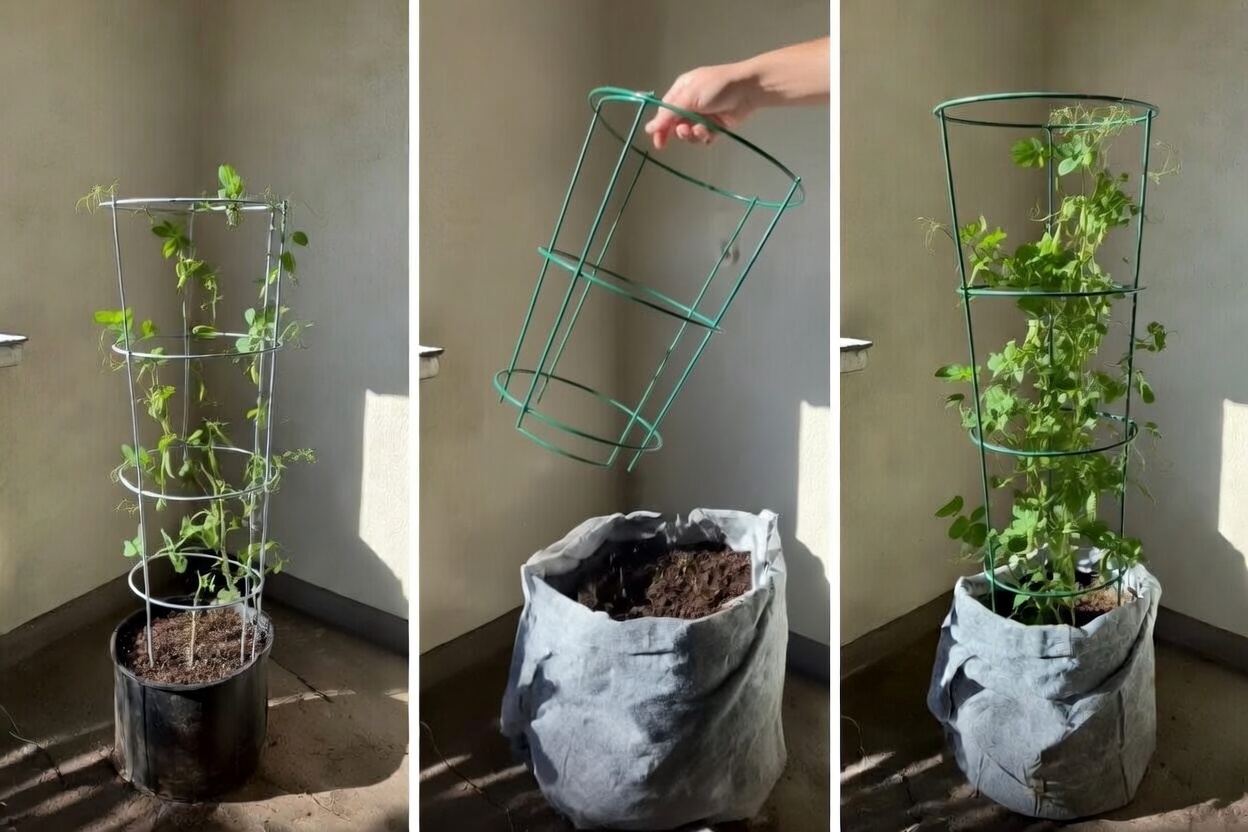
For most beginners, the best pot size for peas on a balcony is a 5-gallon container. While you can grow dwarf varieties in smaller 1-gallon pots, they dry out so fast that a single missed watering in June can kill the plant. A 5 to 10-gallon bag provides the thermal mass needed to keep roots cool. If you are growing on a balcony, look for lightweight options that won’t exceed floor load limits when wet.
Why We Love Peas in Grow Bags
Growing peas in grow bags is a total game-changer. Standard plastic pots can act like ovens; the sun hits the plastic, the soil temperature spikes, and the pea roots (which hate heat) literally cook. Fabric bags allow for “air-pruning,” which prevents roots from circling and becoming root-bound. They also allow heat to escape through the sides. We recommend Rosy Soil for these setups as it balances moisture perfectly using biochar.
Best Pea Varieties for Small Spaces
Not all peas are created equal. For containers, look for “dwarf” or “determinate” varieties that won’t try to climb into your neighbor’s balcony:
-
Sugar Ann: A fantastic snap pea from Botanical Interests that stays compact at 2 feet tall.
-
Tom Thumb: A true heirloom dwarf that grows only 8–9 inches tall—perfect for a windowsill or a hanging basket.
-
Little Marvel: A classic shelling pea that provides high yields in small footprints and has excellent disease resistance.
-
Patio Pride: Specifically bred for pots, this variety is beautiful enough to be used as an ornamental.
3. Step-by-Step Setup (How To): Planting, Trellising, and Early Care
Step 1: Prep Your Container and Location
Find a spot that gets at least 6 hours of direct sunlight. However, be strategic. If your balcony faces south, it will be a sun-trap. You may need to plan for afternoon shade to prevent peas from overheating in containers during late spring. If you are tight on space, the Garden Tower is the ultimate vertical solution, allowing you to grow 50 plants in the space of one chair.
Step 2: Mix the “Black Gold” Soil
Never use standard garden soil in a pot. It is too heavy and will suffocate the roots. Use our best soil mix for container peas recipe:
-
40% Premium Potting Mix: Providing the airy structure.
-
30% Organic Compost: For long-term nutrient release.
-
20% Perlite: Essential for aeration and drainage.
-
10% Well-rotted Manure: For that nitrogen kick.
-
Expert Tip: Add a tablespoon of Garden Lime to balance pH if your compost is highly acidic.
Potting Mix Finder
Step 3: Sow and Inoculate
Soak your seeds in a cup of water for 4–8 hours. You’ll notice them plump up. For an extra boost, dust them with a Rhizobium pea inoculant. This is a beneficial bacterium that helps the plant pull nitrogen from the air. Sow them 1–2 inches deep and 2–3 inches apart. This is a higher density than in-ground gardening, but in a pot, we want a lush “wall” of peas.
Step 4: How to Trellis Peas in Pots
Install your trellis before the seedlings emerge. If you wait, you risk stabbing through the roots later. You can use a simple bamboo tripod, a repurposed tomato cage, or our horizontal twine ladder guide. Peas use tendrils to climb; they cannot grip thick wooden posts. Use thin wire or twine for the best results.
4. Ongoing Care: Watering, Feeding, and Heat Management
Once your peas are climbing, they enter the maintenance phase. Consistency is the key to a heavy harvest.
How Often to Water Peas in Grow Bags
Because fabric bags breathe, they dry out faster than plastic. How often to water peas in containers depends on your local humidity. In the early spring, every 2-3 days is fine. Once the temperature hits 75°F, you will likely need to water daily. Aim to keep the soil like a wrung-out sponge—moist but not dripping.
The Science of Heat Stress
Peas are “cool-season” crops. When the soil temperature exceeds 75°F, the plant begins to prioritize survival over pod production. To prevent peas from overheating in containers:
-
Mulch: Cover the soil with 2 inches of straw or dried grass clippings. This acts as insulation for the roots.
-
Color: Use light-colored grow bags. Black bags absorb heat; tan or green bags stay significantly cooler.
-
Positioning: If a heatwave is forecasted, move your pots behind a railing or larger plants to get shaded afternoon relief.
Feeding Your Peas
Peas are light feeders. If you over-fertilize with nitrogen, you’ll get 4-foot-tall vines with zero flowers. Switch to a phosphorus-rich liquid “Bloom Booster” from Perfect Plants only once you see the first white or purple flowers appear.
5. Troubleshooting: Pests, Diseases, and Balcony Hazards
Even the best-laid plans can go awry. Here is how to handle the “Big Three” pea problems.
Aphids: The Sap Suckers
You’ll see them huddled on the new, tender growing tips. They are tiny green or black bugs. Instead of reaching for chemicals, use a sharp blast of water from a spray bottle to knock them off. Most won’t find their way back.
Powdery Mildew: The White Dust
This looks like someone spilled flour on your leaves. It’s a fungal issue caused by high humidity and poor airflow. If you’re using the Garden Tower, you likely won’t see this due to the 360-degree circulation. Otherwise, ensure your pots aren’t crowded against a wall.
Bird Theft
Birds love pea sprouts. If you see your tiny seedlings getting “topped,” cover the pot with a bit of chicken wire or mesh until the plants are at least 6 inches tall and too tough for the birds to enjoy.
6. How to Harvest Peas for Continuous Production
The biggest secret of the 100 experts I studied is the “Harvest Loop.” A pea plant’s only goal is to make a hard, dry seed for next year. If you let a pod stay on the vine until it’s bulky and yellow, the plant thinks, “Mission accomplished,” and stops flowering.
To keep the harvest going for weeks:
-
Pick Daily: The moment a pod looks glossy and feels plump, snap it off.
-
Use Scissors: Don’t pull the pods, or you might rip the delicate vines. Use small snips.
-
Eat the Shoots: If the plant gets too tall for your trellis, snip off the top 2 inches. These “pea shoots” are gourmet delicacies in restaurants and taste exactly like a concentrated pea.
FAQ: Common Questions About Peas in Containers
What pot size is best for peas? A 5-gallon container is ideal for 8-10 plants. Avoid anything shallower than 8 inches, as peas have deep taproots.
Can I grow peas in grow bags? Absolutely. They are the preferred method for experts because they prevent root rot and overheating.
How often should I water container peas? Daily in the summer, every other day in the spring. If the plant wilts in the evening, it needs more.
Which pea varieties are best for small spaces? Sugar Ann and Tom Thumb. They provide the best “yield per square inch.”
How do I grow peas indoors with grow lights? You need a full-spectrum LED light kept 6-10 inches from the foliage and a room temperature between 60°F and 70°F.
Final Thoughts: The Joy of the First Snap
There is a specific kind of magic in standing on your balcony in your pajamas and picking a sun-warmed snap pea for breakfast. By following this guide, you are setting yourself up for that moment. Don’t be afraid to fail—every “black thumb” is just a gardener who hasn’t tried the right container setup yet.
Leave a Reply