How to Bring Patio Herbs Indoors for Winter: A Beginner’s Step-by-Step Guide
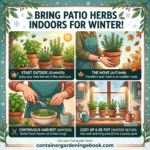
If you’ve ever brought an outdoor potted herb inside for the cold season only to watch it drop leaves, turn yellow, or get covered in tiny bugs, you aren’t alone. Learning how to bring patio herbs indoors for winter is one of the most frustrating challenges for new container gardeners.
Affiliate Disclosure: This post contains affiliate links. If you make a purchase through these links, I may earn a small commission at no extra cost to you. I only recommend products I believe will add value to your gardening journey. Thank you for your support!
The good news? You don’t need a solar-powered greenhouse or a natural green thumb to keep fresh rosemary, thyme, and mint alive through the cold months. You just need a simple, repeatable plan that bridges the gap between outdoor sunshine and dry indoor heating. (Looking for more bite-sized container tips? Check out our full container gardening blog for year-round guides!)
Here is your foolproof guide to overwintering patio herbs indoors, keeping pests out of your living room, and harvesting fresh herbs all winter long.
Quick Answer: How Do You Overwinter Patio Herbs Indoors?
To successfully bring patio herbs indoors for winter:
- Start 2 weeks before the first frost by moving pots to deep outdoor shade to acclimate them to lower light.
- Prune plants back by 30% and spray foliage with organic insecticidal soap to eliminate hidden pests.
- Top soil with 1/2 inch of horticultural sand to stop fungus gnats from breeding indoors.
- Place under full-spectrum LED grow lights for 12 to 14 hours daily.
- Water only when the top 2 inches of soil feel dry—overwatering in winter is the #1 cause of root rot.
1. Timing & Acclimatization: When to Bring Patio Herbs Indoors for Winter
The biggest mistake beginners make when trying to bring patio herbs indoors for winter is waiting until the night of the first hard freeze. A sudden jump from a cool, windy balcony to a warm, dry apartment causes extreme temperature shock, leading to rapid leaf drop.
Patio Sunshine ➔ 10 Days in Outdoor Shade ➔ Bright Indoor Window + Grow Light
- Track Your First Frost Date: Look up your region’s average first frost date. Plan to start your indoor transition two weeks prior.
- The 10-Day Shade Bridge: Move your patio containers into a fully shaded spot outdoors for 7 to 10 days. This slows down the plant’s metabolism and acclimates its leaves to lower indoor light levels.
- Prune Before the Move: Trim back top growth by roughly one-third using clean pruning shears. Pruning reduces the foliage volume, making it easier for the root system to sustain the plant in dimmer indoor conditions.
💡 Small-Space Pro-Tip: If you hate juggling dozens of individual pots every autumn, consider switching to a vertical container system. A mobile setup like the Garden Tower lets you grow up to 50 herbs and greens in a tiny 4-square-foot footprint—making it easy to roll your entire herb garden inside when temperatures plunge.
2. Pest Eviction: How to Stop Bugs Before You Bring Patio Herbs Indoors for Winter
Outdoor pots are home to microscopic pest ecosystems. Taking proper sanitation steps before you bring patio herbs indoors for winter almost guarantees you won’t trigger an outbreak of aphids, spider mites, or fungus gnats in your living space.
Step 1: Hose Down Leaves ➔ Step 2: Insecticidal Soap Spray ➔ Step 3: Topsoil Sand Barrier
- Blast the Foliage: Use a steady stream of water from a garden hose or sink sprayer to knock visible insects off the tops and undersides of the leaves.
- Apply Organic Insecticidal Soap: Spray leaves thoroughly with a ready-to-use organic insecticidal soap or diluted neem oil spray to eliminate hidden eggs.
- The Sand Shield Strategy: Cover the top surface of the potting soil with a half-inch layer of clean horticultural sand. This dry barrier stops adult fungus gnats from laying eggs in moist soil.
- Quarantine for 14 Days: Keep your newly transitioned herbs in a separate room away from existing indoor houseplants for two weeks to ensure no stray pests hitched a ride.
3. Indoor Lighting: Supplemental Grow Lights for Winter Herbs
When you bring patio herbs indoors for winter, winter sunlight coming through standard windows is weak and short-lived. Mediterranean herbs like rosemary, oregano, and thyme require at least 6 hours of intense light daily—something standard winter windowsills rarely supply.
- Use Full-Spectrum LED Grow Lights: Compact, clip-on LED grow lights provide the necessary light spectrum without drastically increasing your electric bill. Position the light source 4 to 6 inches above the herb canopy.
- Automate with Smart Plugs: Plug your grow lights into a daily timer set for 12 to 14 hours of continuous light. Consistency is key for preventing winter dormancy.
- Bounce Natural Light: Place herb containers near white walls or on light-colored trays to reflect ambient light back onto the shaded sides of your plants.
4. Winter Watering Rules: Preventing Root Rot
Overwatering is the number one killer of indoor container herbs. Because plants grow significantly slower in winter, their root systems drink far less water.
- The 2-Inch Finger Test: Push your finger 2 inches into the potting soil. If it feels cool or damp, do not water. Wait until the top 2 inches feel completely dry to the touch.
- Use Room-Temperature Water: Ice-cold tap water shocks tender roots. Keep a filled watering can indoors so the water reaches room temperature before use.
- Drain Excess Runoff: Always empty drainage saucers 15 minutes after watering. Never allow potted herb roots to sit in stagnant standing water.
Potting Mix Finder
Which Patio Herbs Can You Bring Indoors for Winter?
Not all herbs adapt to indoor living at the same rate. Use this quick reference chart to prioritize which patio herbs to save and which to restart from seed.
| Herb Variety | Indoor Survival Rate | Best Overwintering Strategy |
| Rosemary | Moderate | Prefers cool rooms (55–65°F), terracotta pots, high light, and slightly dry soil. |
| Thyme & Sage | High (Easy) | Highly resilient. Requires fast-draining potting mix and 12+ hours of LED grow light. |
| Mint & Chives | High (Easy) | Extremely hardy. Cut stems down to 2 inches above soil level; they will sprout fresh foliage quickly. |
| Basil | Low (Hard) | Sensitive to drafts and low light. Better to start fresh seeds from Botanical Interests under LED grow lights. |
| Parsley & Cilantro | Moderate | Taproots dislike repotting. Sow fresh, high-germination seeds directly into small indoor containers. |
Essential Gear Checklist to Bring Patio Herbs Indoors for Winter
Having the right equipment on hand before you bring patio herbs indoors for winter sets your indoor container garden up for effortless success:
- Nutrient-Rich Indoor Soil: Choose a biochar-based, ultra-draining soil mix like Rosy Soil. Biochar boosts microbial health and moisture retention without risking root rot.
- Drainage Boosters & Specialty Media: For drought-tolerant Mediterranean herbs like rosemary and thyme, mix extra Perfect Plants Perlite into your potting soil to keep roots oxygenated in dim conditions.
- Fresh Herb Seeds: If you’re starting tender herbs like basil, cilantro, or parsley fresh indoors, grab non-GMO, high-germination seeds from Botanical Interests.
- Clip-On LED Grow Light: Look for multi-head, full-spectrum LED fixtures with adjustable goosenecks and built-in timers.
- Breathable Terracotta Pots: Clay containers draw excess soil moisture away from roots, protecting against accidental overwatering.
- Organic Insecticidal Soap & Sticky Traps: Safe for culinary herbs, essential for monitoring and treating common indoor pests.
Frequently Asked Questions (People Also Ask)
Can you successfully bring patio herbs indoors for winter?
Yes, perennial herbs like rosemary, thyme, sage, oregano, chives, and mint can thrive when you bring patio herbs indoors for winter, provided they receive adequate light (12–14 hours daily via grow lights) and are protected from overwatering and hot air drafts.
Should you trim herbs before bringing them inside for winter?
Yes. Trimming herbs back by roughly one-third before moving them indoors reduces the total leaf surface area the plant needs to support, helping it adjust to lower light conditions without dropping leaves.
Why is my indoor rosemary plant drying up and turning brown?
Indoor rosemary typically turns brown due to either root rot from overwatering or extremely low room humidity caused by central heating. Keep rosemary in a cool room, use breathable terracotta pots, and allow the soil surface to dry between waterings.
How do I keep bugs off my patio herbs when I bring them inside?
Wash plants thoroughly with water, treat foliage with organic insecticidal soap, top the potting soil with 1/2 inch of horticultural sand to stop fungus gnats, and keep newly moved plants isolated from houseplants for two weeks.
(Want to explore more urban gardening guides, plant care tutorials, and balcony setups? Head over to our main container gardening blog to keep growing!)
Leave a Reply