Best Grow Light for Apartment Herbs: The Simple Beginner’s Guide (2026)
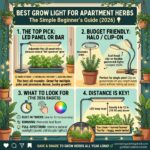
If you live in an apartment and dream of snipping fresh basil, mint, or parsley for dinner, the single biggest game-changer is the best grow light for apartment herbs. Natural window light is rarely enough—especially in winter or on north-facing walls—and that’s why so many beginners end up with leggy, sad plants. The right grow light fixes this without turning your kitchen into a science lab.
Affiliate Disclosure: This post contains affiliate links. If you click through and make a purchase, we may earn a small commission at no additional cost to you. We only recommend products we believe will help beginner container gardeners succeed
This guide is written specifically for complete beginners in their late 20s to early 40s who have limited space, may have killed a houseplant or two, and just want a straightforward system that actually works. No overwhelming jargon. Just clear steps, what to look for, and realistic product types that deliver success and convenience.
Why You Need a Grow Light for Apartment Herbs
Most culinary herbs need consistent, moderately strong light for 12–16 hours a day to stay compact, flavorful, and productive. Apartment windows often fall short. A quality full-spectrum LED grow light gives your plants exactly what they need while staying quiet, cool, and energy-efficient—perfect for living spaces.
What Makes the Best Grow Light for Apartment Herbs
Focus on these practical factors instead of flashy marketing claims:
- Full-spectrum white light — Looks natural in your home (no harsh purple glow) and supports healthy growth.
- Right intensity — Aim for roughly 150–400 µmol/m²/s at the plant level. Most good apartment lights achieve this when placed correctly.
- Photoperiod control — Built-in timer or easy compatibility with a plug-in timer (12–16 hours on is ideal).
- Low heat & quiet operation — So you can place lights close without burning leaves or hearing fans.
- Apartment-friendly form — Compact, easy to mount or clip, and aesthetically acceptable in a kitchen or living room.
- Coverage matched to your setup — One or two pots vs. a full shelf.
Best Grow Light Types for Apartment Herbs (By Your Situation)
- Best for 1–3 pots on a counter or windowsill: Clip-on gooseneck LED lights
Flexible heads let you aim light exactly where it’s needed. Many include timers and dimming. These are the easiest entry point for total beginners and take up almost no space. You can often find solid, budget-friendly full-spectrum clip-on options at Walmart. - Best for shelves, under-cabinets, or multiple pots: Linkable LED bar or T5-style strip lights
These give even coverage across a row of plants and stay low-profile. They’re quiet, efficient, and repeatedly recommended for apartment herb setups. Link several together as your collection grows. Affordable bar-style grow lights are commonly available at Walmart. - Best for existing lamps: Full-spectrum screw-in LED grow bulbs
Simply replace a regular bulb in a desk lamp, pendant, or clamp light. Clean aesthetic and zero extra clutter—ideal if you want the light to blend into your home. These are easy to pick up at Walmart while you’re already shopping. - Best if you want more power later: Compact full-spectrum LED panels
Small, dimmable panels work well for a dedicated herb shelf or corner. Overkill for two pots, but excellent if you plan to expand.
Popular, well-tested styles in current apartment herb growing include quality clip-ons, Barrina-style full-spectrum bars, and reliable white LED bulbs. Prioritize real wattage draw, timer features, and user feedback over exaggerated “1000W equivalent” claims.
Simple Setup Guide for Beginners
- Choose 2–4 easy herbs to start (basil, mint, parsley, chives, or thyme).
You can begin with live starter plants for the fastest success or grow from seed if you prefer. High-quality options are available from Perfect Plants (live plants) and Botanical Interests (seeds). - Select pots with drainage holes. Simple plastic or resin pots with saucers work perfectly and are inexpensive at Walmart.
- Use a quality potting mix (never garden soil). The right mix makes watering more forgiving and gives roots the air and nutrients they need. Many apartment gardeners like the living soil approach from Rosy Soil. You can also find reliable bagged potting mixes at Walmart.
Potting Mix Finder
- Position your grow light 6–12 inches above the tops of the plants.
- Set the timer for 12–16 hours daily (14 hours works well for most people). A basic plug-in timer is cheap and very helpful — easily found at Walmart.
- Water when the top inch of soil feels dry and harvest regularly to keep plants bushy.
That’s it. Consistency with light and watering beats complicated routines.
As your confidence grows and you want to produce more herbs (or even small vegetables) in the same footprint, some apartment gardeners eventually look at vertical systems like the Garden Tower. It’s not necessary when you’re just starting, but it can be a nice next step if you fall in love with container growing.
Common Beginner Mistakes to Avoid
- Placing lights too far away (intensity drops fast).
- Running lights 24/7 (plants need a dark period).
- Choosing pure purple “blurple” lights that look unappealing in living spaces.
- Buying the biggest, most expensive light when a simple clip-on or bar is plenty for herbs.
- Using the wrong soil or pots without drainage.
Final Recommendation
For most people searching for the best grow light for apartment herbs, start with a full-spectrum clip-on or a set of linkable LED bars. These deliver the right light, fit real apartment life, and give beginners the highest chance of success without overwhelm.
You can keep costs low by picking up basic pots, potting mix, a timer, and even an entry-level grow light at Walmart, then upgrade specific pieces (like soil from Rosy Soil or plants from Perfect Plants) as you go.
You don’t need a green thumb or a big yard. You just need the right light and a simple system. Once your first pots are thriving, adding more becomes easy and genuinely rewarding.
For more simple, beginner-friendly container gardening guides, visit our blog at containergardeningebook.com/blog.
Want help matching a specific light type to your exact space (counter only, one shelf, budget range, etc.)? Tell me your setup and I’ll refine the recommendation.
Leave a Reply