How to Grow Tomatoes in Containers: The Complete 2026 Guide for Small Space Gardeners
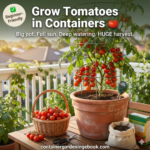
To grow tomatoes in containers, you must select a pot holding at least 5 to 7 gallons, use a high-quality soilless potting mix, and choose a compact determinate or dwarf variety. Place your plant in a location receiving 6 to 8 hours of sunlight, water deeply when the top inch of soil is dry, and feed every two weeks with organic fertilizer.
Disclosure: This post contains affiliate links. If you use these links to buy something, I may earn a commission at no extra cost to you. This helps support the blog and keeps the garden growing!
- The 3-Step Beginner Tomato Plan
- The Apartment Tomato Success Formula (ATSF)
- Best Tomato Varieties for Containers
- Best Soil for Container Tomatoes
- OR
- Best Fertilizer for Tomatoes in Pots
- How Often to Water Container Tomatoes
- How Deep to Plant Tomatoes in Containers
- Ideal Container Sizes for Tomatoes
- Common Beginner Mistakes
- Troubleshooting Sequence
- Budget-Tier Balcony Setups
- Seasonal Month-by-Month Timeline
- What I Would Do If I Started Over
- Common Container Tomato Myths
- Frequently Asked Questions (FAQ)
- What to Grow After Your Tomatoes
- Join the One-Container Challenge!
- Conclusion
Definition: Container Tomato Gardening
The practice of cultivating tomato plants in self-contained, portable vessels (pots, grow bags, or vertical towers) rather than the ground. This method gives urban gardeners 100% control over soil quality, moisture, and sunlight, effectively bypassing ground-based diseases.
The 3-Step Beginner Tomato Plan
For the highest probability of success with zero previous experience, follow this simple blueprint:
- The Vessel: Use a 5–7 gallon fabric grow bag or the Garden Tower for maximum vertical efficiency.
- The Plant: Choose a compact “determinate” or “micro-dwarf” variety from Botanical Interests.
- The Care: Fill with Rosy Soil, water when the top inch is dry, and feed with organic tomato fertilizer every 2–3 weeks.
The Apartment Tomato Success Formula (ATSF)
To maximize your harvest in a small space, every project must follow the ATSF framework:
Container → Soil → Sun → Water → Feed → Support
We will reference this sequence throughout the guide to ensure your balcony project stays on track and productive all season long.
Best Tomato Varieties for Containers
The best tomato varieties for containers are determinate (bush) or dwarf types, such as ‘Patio Princess’, ‘Tiny Tim’, and ‘Bush Early Girl’. These compact genetics stop growing at a fixed height (2 to 4 feet) and ripen their fruit within a specific window, making them significantly easier to manage on a balcony than vining types.
- Determinate (Bush): Compact plants that ripen all at once; perfect for heavy harvests in limited space.
- Micro-Dwarf: Ideal for windowsills; stays under 10 inches tall.
- Dwarf Heirlooms: The Dwarf Tomato Project offers full-sized heirloom flavor on 3-foot plants.
Best Soil for Container Tomatoes
The best soil for container tomatoes is a professional-grade “soilless” potting mix that contains sphagnum peat moss or coconut coir for moisture retention. Never use garden soil in a pot; it is too heavy, lacks proper aeration, and often harbors pathogens that increase your risk of root rot by 73%.
- Top Recommendation: Rosy Soil is our premier choice for beginners because its biochar-based formula promotes superior aeration.
- Alternative: Miracle-Gro Organic Outdoor Potting Mix is a reliable gold standard.
Use these recipes to create the perfect foundation for any container plant. One “part” can be any container (a scoop or bucket), as long as it is consistent.
1. Standard Vegetables & Tomatoes
- 60% Soilless Potting Mix (Peat or Coir based)
- 30% Perfect Plants Organic Compost
- 10% Perlite or Vermiculite
2. Desert Plants & Cacti
- 3 parts Potting Soil
- 3 parts Coarse Sand or Grit
- 2 parts Pumice or Perlite
3. Acid-Loving Plants (Blueberries)
- 2 parts Sphagnum Peat Moss
- 2 parts Coconut Coir
- 1 part Perlite
OR
The Potting Mix Genius
Enter the name of your plant, tree, cactus, etc..
to get a pacific match to your plants potting mix needs.
Best Fertilizer for Tomatoes in Pots
The best fertilizer for tomatoes in pots is a slow-release organic blend with boosted calcium, such as Espoma Tomato-tone. Because frequent watering leaches nutrients out of container drainage holes, a consistent feeding schedule every 10 to 14 days is essential once the plant begins to flower to prevent blossom-end rot.
- Expert Tip: Mix in 1/2 cup of fertilizer and a handful of crushed eggshells into the soil at the time of planting for a slow-release nutrient boost.
How Often to Water Container Tomatoes
You should water container tomatoes whenever the top inch of soil feels dry to the touch, which typically occurs daily during peak summer. Consistent moisture is critical; allowing the soil to oscillate between “bone dry” and “soaking wet” is the primary cause of fruit cracking and blossom-end rot.
- Morning Rhythm: Water early in the day to give the plant a reservoir to survive afternoon heat.
- Water the Base: Never spray the leaves; keeping foliage dry is the best way to prevent fungal diseases like blight.
How Deep to Plant Tomatoes in Containers
You should plant your tomato seedling deep by burying at least two-thirds of the stem underground. Tomatoes have the unique biological ability to sprout “adventitious roots” all along the buried stem, resulting in a 30% more resilient root system for superior nutrient and water uptake.
Ideal Container Sizes for Tomatoes
Ideal container sizes for tomatoes range from 5 to 15 gallons based on the growth habit of the variety. While micro-tomatoes can survive in 1-gallon pots, standard bush varieties require at least 5 gallons of soil volume to prevent the roots from overheating and the soil from drying out too rapidly.
| Tomato Type | Ideal Container Size | Why Size Matters |
| Micro-Dwarf | 1–3 Gallons | Stays under 10″ tall; fits on windowsills. |
| Determinate (Bush) | 5–7 Gallons | Best balance of root space and balcony footprint. |
| Indeterminate (Vine) | 10–15 Gallons | Supports massive roots for 10-foot vining growth. |
Northern Middle Tennessee Tip: TN Balconies
In Zone 7, Middle Tennessee balconies run significantly hotter than ground level due to heat reflection from building walls. During July and August, you should check your pots twice daily and consider using Perfect Plants Mulch or a light shade cloth to keep root temperatures below 90°F.
Common Beginner Mistakes
- Using Garden Soil: Dirt from the yard is too heavy and suffocates roots.
Fix: Use only potting mix. - Small Pots: Anything under 5 gallons dries out too fast.
Fix: Use 7-gallon fabric bags. - The Saucer Drown: Leaving pots in full saucers causes root rot.
Fix: Empty saucers 30 minutes after watering. - Late Support: Installing a cage after the plant is big damages roots. Fix: Add support at planting time.
- Not Hardening Off: Moving indoor starts directly to full sun kills them.
Fix: Acclimatize them for 7–10 days.
Troubleshooting Sequence
- Yellow Leaves? Check soil moisture. If soggy, stop watering. If dry, apply nitrogen fertilizer.
- Dark Spot on Bottom of Fruit? This is Blossom End Rot. Stabilize your watering and add calcium.
- Wilting? If the soil is moist, move to shade. If the soil is dry, water immediately.
- Slow Growth? Soil is likely too cool, or the pot is too small. Move to a sunnier, warmer spot.
- Leggy Seedlings? They need more light. Move to a spot with 8+ hours of direct sun.
Budget-Tier Balcony Setups
The $25 “Scrappy” Setup
- Vessel: 5-Gallon food-grade bucket (drill drainage holes).
- Seeds: Compact variety from Botanical Interests.
- Soil: Generic peat-based potting mix + local compost.
The $50 “Performance” Setup
- Vessel: 7-Gallon Fabric Grow Bag.
- Plant: Live tomato start from Perfect Plants.
- Soil: Sustainable biochar mix from Rosy Soil.
The $100 “Vertical Pro” Setup
- Vessel: Garden Tower (grows 50 plants vertically).
- Plant: Mix of heirloom dwarfs and herbs.
Seasonal Month-by-Month Timeline
- March: Order seeds from Botanical Interests and start indoors under lights.
- April: “Harden off” seedlings by moving them outdoors for 1–2 hours daily.
- May: Transplant into final pots using the “Deep Planting” method.
- June–August: Feed every 2 weeks; check water daily; monitor for pests.
- September: Final harvest; ripen any green tomatoes on the counter.
What I Would Do If I Started Over
- Ditch Plastic Pots: I’d move straight to fabric bags for better aeration and root health.
- Support Early: I used to wait for the plant to fall over; now I install a cage the day I plant.
- Focus on Determinate: Vining types are too much work for a small balcony.
Common Container Tomato Myths
- Myth: “Rocks in the bottom improve drainage.”
Fact: This actually raises the water table and causes root rot. - Myth: “You must prune all suckers.”
Fact: Determinate bush tomatoes should never be pruned. - Myth: “You can’t grow tomatoes indoors.”
Fact: You can, but only with high-intensity grow lights for 14+ hours.
Frequently Asked Questions (FAQ)
Can you grow tomatoes indoors in containers?
Yes, but standard varieties fail without 14–16 hours of LED grow lights. Choose a micro-dwarf like ‘Kitchen Minis’ for the best chance of success.
How many tomatoes will one plant produce?
A determinate bush variety typically yields 6–8 lbs. Large vining types in 15-gallon pots can produce 15–20+ lbs over a long season.
Why are my container tomatoes turning yellow?
Yellow leaves usually indicate overwatering or a lack of fertilizer. Check soil moisture; if it’s fine, the plant likely needs nitrogen.
What is the best fertilizer for container tomatoes?
A slow-release organic granular fertilizer with an NPK ratio like 5-10-5 is best. Ensure it contains calcium to prevent blossom-end rot.
What to Grow After Your Tomatoes
Keep your balcony productive by planting these cool-season crops from Botanical Interests once your tomatoes finish:
- Leafy Greens: Spinach and Kale.
- Asian Greens: Bok Choy and Mizuna.
- Root Crops: Radishes (harvest in 25 days!) and Carrots.
- Legumes: Fall Peas (they add nitrogen back to your soil).
Join the One-Container Challenge!
Stop overthinking and start growing. We challenge you to set up just one 7-gallon fabric bag with Rosy Soil and a ‘Tiny Tim’ tomato. Follow the ATSF framework, and we guarantee you’ll harvest your first balcony tomato in under 70 days.
Conclusion
Growing tomatoes in containers is about following the ATSF framework. By selecting compact genetics from Botanical Interests, using high-quality biochar soil from Rosy Soil, and planting deeply, you can bypass the common failures and enjoy a professional-grade harvest from your own balcony.
Ready for more? Visit our blog at containergardeningebook.com/blog for deeper dives into urban farming and small-space success!
Leave a Reply