The Best Way to Grow Petunias in Containers: Spectacular Success or Jaw-Dropping Blooms
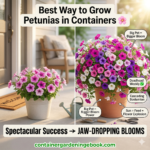
To learn how to grow petunias in containers, choose a 12–14 inch container size and use a professional soilless potting mix. Follow the watering rule of keeping soil evenly moist but never soggy. Meet the sun requirement of 6–8 hours daily and follow a fertilizer cadence of weekly liquid feedings for spectacular, nonstop summer blooms.
Disclosure: This post contains affiliate links. If you use these links to buy something, I may earn a commission at no extra cost to you. This helps support the blog and keeps the garden growing!
Quick-Start Petunia Success Card
| Feature | Requirement |
| Sun | Full sun (6–8 hours daily) |
| Container Size | 12–14 inches minimum |
| Soil | Soilless potting mix only |
| Watering | Evenly moist, never soggy |
| Fertilizer | Weekly liquid feed (Phosphorus-rich) |
| Best Varieties | Supertunia Vista, Wave, Cascadia, Itsy |
5 Reasons to Grow Petunias in Containers This Season
If you have ever felt like a “plant killer,” learning to grow petunias in containers is your ultimate comeback strategy. They are the most popular choice for modern “plant parents” for several simple reasons:
-
Nonstop Blooms: Unlike perennials that bloom once, these flower from spring until the first hard frost.
-
No Deadheading: High-performance “self-cleaning” varieties like Supertunias drop old flowers automatically.
-
Heat Tolerance: They thrive in the baking sun of urban balconies and south-facing patios.
-
Long Trailing Habit: They quickly grow into a massive “flower waterfall” up to 3 feet long.
-
Beginner-Friendly: They are “tough as nails” and recover quickly from minor care mistakes.
For more inspiration and a full list of companion plants, visit our container gardening blog.
The Beginner Setup Framework: 4 Steps to Success
When you decide to grow petunias in containers, don’t use heavy dirt from your yard; it will suffocate roots in a restricted environment. Follow this professional-grade checklist for your balcony or patio.
Step 1: Choose Your Vertical Space
If you have a tiny balcony, go vertical. The (https://containergardeningebook.com/garden-tower) is a revolutionary system that allows you to grow 50 plants in just 4 square feet. It features a central tube where worms turn kitchen scraps into organic “worm tea” that feeds your plants directly at the root, making it the perfect “Ultimate Patio Farm” for those who want to grow petunias in containers alongside fresh herbs.
Step 2: Invest in a Smart Container
Petunias are thirsty but hate “wet feet.” High-end self-watering pots like Lechuza or EarthBox use a wicking system to provide constant moisture while preventing root rot. If using a standard pot, ensure it is at least 12–14 inches wide to prevent the plant from becoming root-bound too quickly.
Step 3: The Foundation (Soil & Biochar)
Start with Perfect Plants Organic Potting Mix. It is a sterile, nutrient-dense mix fortified with mycorrhizae and worm castings that promote explosive root development.
To make watering even easier as you grow petunias in containers, add (https://containergardeningebook.com/rosy-soil). Biochar acts like a permanent sponge, holding 10x its weight in water and nutrients so they don’t wash away during heavy watering. Research shows biochar-based media can significantly enhance plant height and flower count.
Step 4: The Pro-Tool Kit
You only need two items to manage your plants like a pro:
-
Nisaku Hori Hori Knife: This Japanese tool replaces your trowel, knife, and weeder all in one. It’s ideal for digging perfect holes in your (https://containergardeningebook.com/garden-tower) pockets.
-
Smart Moisture Meter: Use a tool like the FYTA Beam or PlantPulse that syncs to your smartphone to get alerts when it’s time to water, taking the guesswork out of how to grow petunias in containers.
The Potting Mix Genius
Potting Mix Finder
The secret to “green thumb” success is mixing the right home for your roots. Use these exact recipes for your container projects.
| Plant Type | Fiber Base | Drainage Elements | Superchargers & Food |
| Petunias & Annuals | 10 qts Perfect Plants Mix | 2 qts Perlite | 2 cups(https://containergardeningebook.com/rosy-soil) |
| Citrus & Fruit Trees | 1 part Potting Soil | 5 parts Fine Bark + 1 part Perlite | 1 tbsp Lime per gallon |
| Cacti & Succulents | 1 part Peat Moss | 1 part Coarse Sand + 1 part Perlite | 2 parts Sterilized Loam |
| Moisture-Loving Herbs | 1 part Peat Moss | 1 part Perlite | 1 part Perfect Plants Mix |
Designing Your Pot: Thriller, Filler, Spiller
To get that “luxury nursery” look as you grow petunias in containers, follow this simple design recipe:
-
The Thriller (Height): Place a tall plant like Canna Lily or Angelonia in the center.
-
The Filler (Mound): Use Zonal Geraniums or Lantana to fill the middle space.
-
The Spiller (Trail): This is where petunias shine! Use seeds from (https://containergardeningebook.com/botanical-interests) to create a cascade over the edge.
3 “Can’t-Miss” Container Recipes
-
Sunset Balcony Mix: Orange Canna Lily (Thriller), (https://containergardeningebook.com/botanical-interests) (Filler), and (https://containergardeningebook.com/botanical-interests) (Spiller).
-
Heat-Wave Petunia Pot: Angelonia (Thriller), Zonal Geranium (Filler), and Supertunia Vista Bubblegum (Spiller).
-
Trailing Waterfall Basket: A mix of Wave Petunias, Bacopa, and Silver Falls Dichondra.
Your Week-by-Week Petunia Growth Timeline
Watching your plants develop is the most rewarding part of learning to grow petunias in containers:
-
Week 1: Planting. Soak your potting mix, plant your seedlings, and give them a deep first watering.
-
Week 2–3: Growth Flush. Roots are established. You’ll see a first “growth flush” of new green leaves.
-
Week 4–6: Trailing Begins. Stems begin to spill over the edge. Start your weekly liquid fertilizer feedings now.
-
Week 8+: Peak Bloom. Foliage should be nearly invisible under a solid mass of flowers.
Seasonal Petunia Calendar
-
March/April: Buy your “starter plants” or start (https://containergardeningebook.com/botanical-interests) indoors 10 weeks before the last frost.
-
May/June: High growth season. Water daily as temperatures rise.
-
July: The “Mid-Season Haircut.” Trim stems back by 1/3 to stimulate fresh flowers for late summer.
-
August: Heat-wave care. In high-heat areas like Tennessee, you may need to water twice a day.
-
Sept/Oct: Fall color. Petunias love cooler nights and will bloom until the first hard freeze.
Ranked: The Best Petunia Varieties for 2026
Selecting the right variety is critical when you grow petunias in containers.
-
Supertunia Vista®: The absolute “king” of performance. Virtually indestructible and trails up to 3 feet.
-
Wave® Petunia: Famous for their rapid spreading habit. Perfect for covering a railing quickly.
-
Cascadia™: Best for hanging baskets; features unique frilled edges and vintage color patterns.
-
Surfinia®: The original European trailing petunia. Highly rain-resistant.
-
Shock Wave®: Best for small window boxes. They produce thousands of petite, high-impact flowers.
Advanced Biological Life Hacks for Your Petunias
To truly master how to grow petunias in containers, you can apply the latest science:
-
Scent Timing: Scientists like Prof. Alexander Vainstein found that the PhDEF gene coordinates both petal shape and scent production. Petunia fragrances, like methyl benzoate, reach their peak at dusk to attract pollinators.
-
Touch Stress: Brushing your hands over young petunias 80 times a day can naturally reduce plant height by 43.2%, keeping them bushy and compact without using chemical growth regulators (research by Jędrzejuk and Kuźma).
-
pH Management: Petunias are sensitive. Keep your soil pH between 5.5 and 6.0. If the pH rises above 6.2, the plant cannot absorb iron, leading to yellow leaves with green veins.
Troubleshooting Common Issues When You Grow Petunias in Containers
| Problem | Cause | Fix |
| Yellow Leaves | High soil pH / Iron deficiency | Add a “Chelated Iron” supplement; use acidic fertilizer. |
| Leggy Growth | Not enough sun or food | Ensure 6+ hours of sun; trim back by 1/3 and feed weekly. |
| No Blooms | Budworms | Tiny caterpillars eat flowers from the inside. Apply insecticidal soap immediately. |
| Root Rot | Blocked drainage | Ensure pots have holes; let top inch of soil dry out between waterings. |
| Heat Stress | Afternoon wilting | Move pots to a spot with afternoon shade during 90°F+ heat waves. |
Variety Deep-Dive: Which Petunia is Right for You?
When you grow petunias in containers, the market offers a dizzying array of choices. Understanding the nuances between the top players will save you time and money.
The Supertunia Vista Series
Often called the “landscape petunia,” the Vista series (like the iconic ‘Bubblegum’) is a favorite because it is sterile. Because it doesn’t waste energy making seeds, it directs all its power into producing flowers. If you want to grow petunias in containers that look like a professional botanical garden display, this is your go-to.
The Wave Revolution
The original Wave petunias changed the game in 1995. They are aggressive growers. If you are using a (https://containergardeningebook.com/garden-tower), Wave petunias can quickly fill the space. However, be aware that they have massive root systems and can become root-bound faster than other types if the container is too small.
Shock Wave for Baskets
If you are a fan of daintier looks, the Shock Wave series is the “best for baskets.” These produce thousands of smaller, 1.5-inch flowers. They are also the earliest to bloom of any spreading petunia, allowing you to start your season sooner.
Sky Family Wonders
For those who want a “conversation starter,” Selecta One’s Sky series (NightSky, MysterySky, RoyalSky) is essential. Each flower looks like a miniature universe. As an expert tip, remember that these patterns are temperature-dependent. If you grow petunias in containers during a particularly hot summer, your “stars” might disappear as the flower turns solid purple.
Potting Mix Secrets: Why Quality Matters
The single most important decision you make when you grow petunias in containers is what you put inside the pot. Professional growers use “soilless” media for three scientific reasons:
-
Porosity: Roots need oxygen just as much as water. Standard garden soil compacts, essentially “drowning” the roots.
-
Sterility: Bagged mixes like Perfect Plants Organic Potting Mix are free from the fungi and pathogens that cause “damping off” in young seedlings.
-
CEC (Cation Exchange Capacity): This is the soil’s ability to hold onto nutrients. Adding (https://containergardeningebook.com/rosy-soil) increases the CEC of your mix, meaning your weekly fertilizer feedings actually stay in the pot rather than washing out the bottom.
Urban Challenges: High-Rise and Balcony Success
If you are a city dweller trying to grow petunias in containers on a 15th-floor balcony, you face unique microclimates.
The Wind-Shear Factor
High-rise balconies act like “man-made cliffs.” Wind can shred petunia leaves and dry out soil in hours. To combat this, use heavy pots (ceramic or concrete) or anchor your (https://containergardeningebook.com/garden-tower) securely. Mulching with heavy materials like river rocks can also prevent the topsoil from blowing away.
Reflected Heat Scorch
Glass balcony doors and concrete walls create a “heat island” effect. During the 12 PM – 3 PM peak, temperatures can be 5°C warmer than the street level. Move your petunias 30cm away from glass doors to prevent “solar scorch” on the leaves.
Mastering the Fertilizer Cycle
Petunias are “heavy feeders.” Think of them like athletes—they need high-quality fuel to perform. When you grow petunias in containers, the frequent watering required to keep the plant alive also washes away nutrients.
-
The 200 mg/L Rule: Commercial researchers have found that petunias grow largest and healthiest when provided with a nitrogen rate of 200 mg/L.
-
The “Every Third Watering” Rule: A simple way for beginners to stay consistent is to feed your plants every third time you water.
-
Iron is Essential: If your leaves are turning yellow but the veins stay green, your plant is crying for iron. Use a fertilizer with “chelated iron” to unlock the green again.
Petunia FAQ
Why are my petunias leggy?
It’s a natural response to reaching peak size in mid-summer. Give them a “haircut” by trimming stems back by 1/3 in July; they’ll bounce back thicker in about 10 days.
How often should I water petunias in pots?
Check daily. Stick your finger into the soil up to the first knuckle; if it’s dry, water deeply. In the height of summer, container petunias usually need water every morning.
Do petunias like full sun or shade?
They crave full sun (at least 6 hours). While they will survive in shade, they will produce very few flowers and become spindly.
Why do petunias stop blooming?
This is usually a lack of nutrients or a budworm infestation. Petunias are “heavy feeders” and need weekly liquid fertilizer to sustain their fast growth.
What’s the best fertilizer for petunias?
Use a water-soluble “Bloom Booster” (where the middle number, Phosphorus, is the highest). For professional-grade results, target a nitrogen rate of 200 mg/L.
Final Thoughts: Ready to Transform Your Space?
Learning how to grow petunias in containers is the most rewarding way to turn a grey balcony into a floral sanctuary. By combining the right genetics from (https://containergardeningebook.com/botanical-interests), the vertical efficiency of the (https://containergardeningebook.com/garden-tower), and the premium foundation of Perfect Plants soil and (https://containergardeningebook.com/rosy-soil) biochar, you eliminate 90% of the hurdles that stop most beginners.
Stop dreaming and start growing. Visit our container gardening blog for more expert guides, and tag us in your beautiful balcony transformations!
Leave a Reply