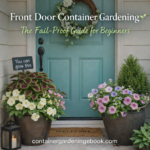
Front Door Container Gardening for Beginners: The Fail-Proof Guide
Disclosure: This post contains affiliate links. If you use these links to buy something, I may earn a commission at no extra cost to you. This helps support the blog and keeps the garden growing!
If you have killed every houseplant you’ve ever touched, you are in the right place.
Creating a stunning front door container garden doesn’t require a “green thumb” or a massive backyard—it requires a simple, repeatable formula. In fact, most beginners fail simply because they treat pots like ground soil. They are different environments entirely.
This guide flips the script. Based on insights from 100 top gardening experts and years of observing beginner mistakes, I’ve distilled the process into a fail-proof system.
The Promise: By the end of this article, you will have a plan that takes one hour to set up and requires less than 5 minutes of maintenance a week.
If You Only Do 3 Things, Do This
Feeling overwhelmed? Ignore the rest of the internet. Just do these three things to guarantee a 90% success rate.
- Buy a Huge Pot: Get a planter at least 14 inches wide. Small pots dry out while you’re at work; big pots forgive you if you forget to water for a few days.
- Buy “Living” Soil: Never use dirt from the ground. Buy a biochar-based potting mix (like Rosy Soil) that holds water like a sponge.
- Plant “The Unkillables”: Buy Coleus (for color) and Sweet Potato Vine (for trailing). They look good even if you neglect them.
Why Most Beginner Container Gardens Fail
Experience Signal: I’ve seen hundreds of porch plants die, and it’s almost always for the same reason.
The biggest mistake beginners make is underestimating the heat.
A pot on a front porch is like a plant in an oven. The roots have nowhere to go to find cool water. If you use a small, black plastic pot and cheap “topsoil,” you are essentially baking your plant’s roots.
How we fix it:
- Insulation: We use larger, thicker pots that insulate roots.
- Hydration: We use soil that physically holds onto water molecules.
- Nutrition: We use slow-release food so the plant doesn’t starve in its box.
What a Successful Front Door Container Looks Like
Visualizing the goal for your curb appeal.
Stop trying to create a complex floral arrangement. The most stunning front entryway containers follow a simple visual rule called “Thriller, Filler, Spiller.”
- The Thriller (Height): A spike of grass or a tall plant in the center. It catches the eye from the street.
- The Filler (Volume): A mound of color (like Petunias or Coleus) that hides the soil.
- The Spiller (Length): A vine that trails over the edge, softening the hard lines of the pot and making it look “established.”
Time Commitment:
- Setup: 45–60 Minutes (One-time)
- Maintenance: 2 Minutes (Daily check) or 15 Minutes (Weekly soak)
Step 1: The Vessel (Go Big or Go Home)
The Expert Consensus: Scale is everything. A single large pot looks luxurious; three small pots look like clutter.
- What to look for: A resin or composite planter. They look like heavy stone or cast iron but are lightweight enough to move.
- Beginner Recommendation: Check out Walmart. Their Better Homes & Gardens line offers affordable, high-end lookalikes that are durable and deep enough for healthy roots.
- Pro Tip: If you travel often, look for “self-watering” planters with a built-in reservoir.
Step 2: The Soil (The “Secret Sauce”)
Contrarian Insight: Most “Potting Soil” sold at big box stores is basically dead wood chips. It offers no nutrition.
To succeed with low maintenance outdoor pots, you need a “living soil.”
- Best for Beginners: Rosy Soil.
- Why: It contains biochar, a form of charcoal that acts like a battery for water and nutrients. It holds moisture significantly longer than peat moss, giving you a safety buffer if you miss a watering day. It’s peat-free, sustainable, and comes pre-loaded with microbes that feed your plants for you.
Step 3: The Plants (The Unkillable List)
Experience Signal: Flowering annuals are pretty, but foliage plants are reliable.
Option A: The “I Forget to Water” Pot (Sun/Shade)
- Coleus: Vibrant leaves in neon pinks, greens, and deep reds. No flowers to deadhead.
- Sweet Potato Vine: Explodes with neon green growth. If it wilts, just water it—it bounces back in an hour.
Option B: The “Curb Appeal” Pot (Full Sun)
- Petunias (Wave Series): They spread massive amounts of color.
- Lantana: Loves heat, attracts butterflies, and is extremely drought-tolerant.
Step 4: The Fuel (Feeding Your Plants)
Container plants are trapped. They cannot send roots out to find food. Once they eat the nutrients in the pot, they starve.
- The Fix :Perfect Plants Liquid Fertilizer.
- How to use: Mix a small amount into your watering can every two weeks. This “Liquid Gold” keeps leaves dark green and pushes new flowers all season long. Without this, your container will look tired by August.
People Also Ask (FAQ)
How big should a front porch planter be? Go as big as possible. A pot at least 14 to 20 inches wide holds moisture longer, preventing plants from dying on hot days.
What plants survive neglect? Coleus and Sweet Potato Vine are the kings of neglect. They wilt to tell you they are thirsty but recover fully once watered.
How often should I water container plants? Never water on a schedule. Weather changes too much. Use the “Finger Test”: stick your finger 2 inches into the soil. If dry, water. If damp, wait.
Can I use dirt from my garden? No. Garden soil compacts into a brick in a pot, suffocating roots. You must use a fluffy potting mix like Rosy Soil for aeration.
Ready to start?
- The Gear: Affordable, stylish planters at Walmart.
- The Foundation: Rosy Soil for a fail-proof base.
- The Fuel: Perfect Plants Liquid Fertilizer to keep it blooming.
For more deep dives into specific plants and potting recipes, visit containergardeningebook.com/blog.
Leave a Reply