Container Gardening for Beginners: 13 Best Plants & Starter Guide (2026)
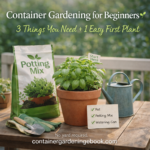
Start a lush vegetable and flower garden on your apartment balcony with this expert-backed guide designed specifically for small spaces. We cover the essential pots, organic soil mixes, and the top 13 fool-proof plants you need to master container gardening for beginners today.
Disclosure: This post contains affiliate links. If you use these links to buy something, I may earn a commission at no extra cost to you. This helps support the blog and keeps the garden growing!
- 3-Step Starter Plan for Beginners
- Why Container Gardening is the Best Start for Beginners
- Choosing the Best Containers for Small Spaces
- Selecting the Best Potting Soil
- 13 Best Easy Plants for Beginner Container Gardens
- Mastering Watering: The Key to Success
- Fertilizing Your Container Garden
- Pest Control and Troubleshooting
- Local Microclimate Tip: Middle Tennessee
- Frequently Asked Questions (FAQ)
3-Step Starter Plan for Beginners
If you are overwhelmed by advice, follow this simple workflow to get your apartment garden running in one weekend. This plan eliminates the “analysis paralysis” often associated with container gardening for beginners.
- Choose Pot & Drainage: Buy one large self-watering container (like an EarthBox) or two 5-gallon fabric grow bags. Ensure they have drainage holes to prevent root rot, which is the most common mistake new gardeners make.
- Pick 3 Easy Plants: Purchase three starter plants: one Cherry Tomato (the “Thriller”), one Basil plant (the “Filler”), and one Marigold (for pest control). These are forgiving and productive.
- Set a Watering Routine: Check moisture every morning by sticking your finger one inch into the soil. If it is dry, water until liquid flows out the bottom, and feed every two weeks with liquid fertilizer.
Why Container Gardening is the Best Start for Beginners
For many, container gardening for beginners is the gateway to a lifelong obsession with horticulture. Unlike in-ground gardening, which requires tilling land, amending native soil, and battling large-scale weeds, containers offer a controlled environment. You determine exactly what soil goes in, meaning you start with a weed-free, nutrient-dense foundation.
Furthermore, container gardening for beginners allows for mobility. If a plant isn’t thriving in a corner of your balcony, you can simply move it to a sunnier spot. This flexibility is crucial for apartment dwellers who may deal with shifting shadows from neighboring buildings. Whether you have a fire escape, a patio, or just a bright windowsill, the barrier to entry is incredibly low.
Choosing the Best Containers for Small Spaces
The most critical decision you will make in container gardening for beginners is selecting the right vessel. A common misconception is that small plants only need small pots. In reality, small pots hold less soil, which means they hold less water. In the heat of summer, a small pot can dry out in hours, killing your plant.
Fabric Grow Bags
Highly recommended by experts like Kevin Espiritu for container gardening for beginners, fabric pots are made of breathable, felt-like material.
- Root Health: The fabric allows air to reach the root zone. When a root hits the air, it stops growing (air pruning) and branches out, creating a dense, fibrous root system rather than spiraling around the pot.
- Temperature Control: Fabric breathes, keeping the roots cooler in summer compared to plastic or ceramic.
- Top Pick: Smart Pots or Epic Gardening Lined Grow Bags (5–10 gallons).
Self-Watering Planters
These are essential for busy professionals trying to master container gardening for beginners. They feature a water reservoir at the bottom that wicks moisture up to the roots via capillary action.
- The Buffer: This reservoir provides a buffer, allowing your plants to survive if you miss a day of watering or go away for a weekend.
- Nutrient Retention: Because water flows up, nutrients aren’t washed out of the bottom drainage holes as quickly.
- Top Pick: EarthBox (Available at Wal-Mart). These are often cited as the most foolproof system for growing high-yield vegetables like tomatoes.
Aesthetic & Lightweight Resin
If you need the look of ceramic without the heavy weight, resin planters are the solution for balcony container gardening for beginners.
- Durability: Unlike terracotta, which can crack in freezing temperatures, high-density resin can withstand the elements year-round.
- Weight: They are lightweight enough to move easily, which is vital for maintaining balcony weight limits.
- Top Pick: Better Homes & Gardens Resin Planters (at Wal-Mart). They mimic high-end stone but are durable and light.
Selecting the Best Potting Soil
Never use “garden soil” or dirt from the ground in your containers. This is a cardinal rule of container gardening for beginners. Field soil contains clay and silt that will compact into a concrete-like brick in a pot, suffocating roots and preventing water drainage. You must use a “soilless” potting mix designed for drainage and aeration.
What is in a Good Mix?
A high-quality mix for container gardening for beginners usually contains:
- Peat Moss or Coco Coir: To hold moisture.
- Perlite or Vermiculite: White volcanic rocks that create air pockets for drainage.
- Compost: For nutrients.
The Potting Mix Genius
Enter the name of your plant, tree, cactus, etc..
to get a pacific match to your plants potting mix needs.
Expert Soil Recommendations
- Eco-Friendly Choice: Rosy Soil. This mix is peat-free and uses biochar (carbon-negative charcoal) to hold massive amounts of water and nutrients. It comes pre-loaded with beneficial mycorrhizae fungi to support root health, giving you a professional edge in container gardening for beginners.
- Nursery-Grade Choice: Perfect Plants Organic Potting Mix. This professional mix is enriched with mycorrhizae and uses coconut coir and pine bark to ensure the soil stays loose and airy, preventing the root rot that plagues many novices.
- Convenient Choice: Espoma Organic Potting Mix (Available at Wal-Mart). A reliable, widely available standard often used by experts like Garden Answer.
13 Best Easy Plants for Beginner Container Gardens
Avoid difficult plants like cauliflower, corn, or orchids for your first season. To build confidence in container gardening for beginners, focus on these 13 “ego-booster” plants that are aggressive growers and offer high yields. You can order healthy starter plants directly from Perfect Plants Nursery to skip the fragile seedling stage.
- Mint: Mint is nearly impossible to kill. In fact, it is invasive. This makes it perfect for container gardening for beginners because the pot contains its roots, preventing it from taking over your yard.
- Basil: The essential kitchen herb. Harvest leaves from the top down to encourage the plant to bush out. It thrives in the heat and pairs perfectly with tomatoes.
- Chives: A “cut-and-come-again” perennial that returns every spring with minimal effort. Their purple flowers are also edible and attract pollinators.
- Lettuce: Grows fast in shallow pots and is perfect for shady balconies. You can harvest the outer leaves for a salad, and they will grow back in a few days.
- Swiss Chard: Produces colorful stalks (neon pink, yellow, orange) all season long. It is heat tolerant and provides a continuous harvest of greens.
- Spinach: Thrives in cooler spring/fall weather when other crops struggle. It is a great crop to start your container gardening for beginners journey in March or April.
- Cherry Tomatoes: Produce fruit earlier and more abundantly than large slicing tomatoes. Varieties like ‘Sun Gold’ or ‘Sweet 100’ are prolific in pots.
- Hot Peppers (Jalapeño/Chili): Compact plants that love heat and produce dozens of peppers. They require less water than tomatoes and have few pest issues.
- Radishes: The fastest vegetable you can grow. From seed to harvest in just 25–30 days, providing instant gratification for impatient gardeners.
- Bush Beans: Unlike pole beans, these don’t need a trellis. They stay compact and produce a large harvest all at once, ideal for small spaces.
- Bush Zucchini: Look for compact varieties designed for large pots (10+ gallons). One plant can yield heavy crops of squash all summer.
- Marigolds: Beautiful flowers that deter pests and add bright color to your balcony. They are a staple companion plant in container gardening for beginners.
- Zinnias: Pollinator magnets that bloom all summer. The more you cut flowers for vases, the more the plant blooms.
Mastering Watering: The Key to Success
The number one way to fail at container gardening for beginners is improper watering. Pots dry out much faster than the ground.
- The Finger Test: Don’t rely on a schedule. Weather changes. Stick your finger one inch into the soil. If it feels dry, water. If it feels moist, wait.
- Water Deeply: When you water, keep going until water flows freely out of the bottom drainage holes. This ensures the entire root ball is saturated. Shallow watering encourages weak, shallow roots.
- Morning is Best: Water in the morning so the plant is hydrated before the midday sun hits. This also allows foliage to dry off, preventing fungal diseases.
Fertilizing Your Container Garden
Potting soil usually contains enough nutrients for about 4-6 weeks. After that, the plant has eaten everything, and water has flushed the rest out. To succeed in container gardening for beginners, you must feed your plants.
- Liquid Fertilizer: This is absorbed instantly by the roots. Use a balanced organic liquid fertilizer every 2 weeks.
- Slow-Release Granules: Mix these into the soil at planting time. They break down slowly over months, providing a steady drip of nutrition.
Pest Control and Troubleshooting
Even in a high-rise, pests can find you. Identifying them early is crucial for container gardening for beginners.
- Aphids: Small green or black bugs on the undersides of leaves. Fix: Spray them off with a strong blast of water or use insecticidal soap.
- Spider Mites: Tiny red dots and webbing on plants. They love hot, dry weather. Fix: Increase humidity and spray with Neem oil.
- Yellow Leaves: Usually a sign of overwatering (root rot) or nutrient deficiency (nitrogen). Check your drainage and fertilizer schedule.
Local Microclimate Tip: Middle Tennessee
If you are practicing container gardening for beginners in Middle Tennessee (Zone 7a/7b), specifically around Nashville or Clarksville, TN. timing is everything. Our average last frost date is around April 16, so do not put warm-season crops (tomatoes, peppers) out unprotected before then.
Conversely, our humid summers can lead to fungal issues like powdery mildew. Ensure your containers have excellent airflow by not overcrowding them, and try to water at the soil level (not the leaves). For winter gardening, our first frost usually hits around October 14, so plan your fall crops like kale and spinach to go in by late August.
Don’t know your Plant Hardiness Zone or just needing the Frost Dates? Well just enter your zip code to find the answer.
Frequently Asked Questions (FAQ)
Do pots really need drainage holes? Yes. Without drainage holes, water pools at the bottom of the pot, displacing oxygen and causing root rot, which will kill your plant. If you have a decorative pot without a hole, use it as a “cachepot” by placing a plastic nursery pot inside it. This is a fundamental rule of container gardening for beginners.
How often should I water my container garden? Water when the top inch of soil feels dry to the touch. In the heat of summer, this might be every day. In cooler months, it might be once a week. Avoid watering on a schedule; water based on the soil’s moisture level using the “finger test.”
Can I reuse my potting soil next year? Yes, but you should refresh it. Old soil loses its structure and nutrients over the season. Mix 50% fresh potting mix with your old soil and add a slow-release organic fertilizer before planting new crops.
What vegetables grow best in containers? Leafy greens (lettuce, spinach, kale), herbs, peppers, bush beans, and determinate tomatoes are the best performers for containers. Root vegetables like radishes and carrots also do well if the pot is deep enough to accommodate the root.
Is liquid or granular fertilizer better? For container gardening for beginners, liquid fertilizer is often better because it fixes nutrient deficiencies quickly. However, a combination of both (granular at planting, liquid for maintenance) yields the best results.
Jessica Sowards says, “You will kill plants.” Accept it now. It doesn’t mean you failed; it means you’re learning. A dead plant is just compost for the next one. Start with one large pot, good soil like Rosy Soil, and a mint plant. You’ve got this.
Looking for more in-depth advice? For detailed guides on specific crops and advanced container strategies, visit our blog at containergardeningebook.com/blog.
Leave a Reply