Fall Veggies for Low Light Balcony: The Ultimate Beginner’s Guide
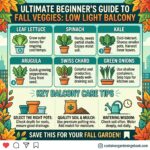
Growing fall veggies for low light balcony setups is the ultimate secret weapon for apartment gardeners who have ever killed a houseplant. You do not need eight hours of scorching summer sunshine or a suburban yard to harvest fresh, crisp produce. Growing fall veggies for low light balcony spaces works because cool-season leafy greens and quick-root crops do not require intense solar heat. Instead, these resilient plants thrive by converting soft, ambient skylight into lush, edible leaves—even on north-facing balconies with zero direct sunlight. If your patio has open sky overhead, you have all the light energy you need to grow a flourishing fall garden.
Affiliate Disclosure: This post contains affiliate links. If you make a purchase through these links, I may earn a small commission at no extra cost to you. I only recommend products I believe will add value to your gardening journey. Thank you for your support!
Top Fall Veggies for Low Light Balcony Success
Summer crops like tomatoes and peppers require massive amounts of direct solar energy to produce flowers and fruit. The best fall veggies for low light balcony containers are different: leafy greens and quick-growing roots feed efficiently on indirect ambient skylight, making them perfect for apartment balconies shaded by tall buildings, overhangs, or north-facing exposures.
-
Baby Arugula
-
Sunlight Needed: 2 hours of direct sun or bright ambient skylight
-
Harvest Timeline: 3 weeks (21 days)
-
Why It Works: Highly efficient at converting diffuse sky radiation into rapid, peppery foliage.
-
-
Mâche (Corn Salad)
-
Sunlight Needed: 2 hours of ambient skylight
-
Harvest Timeline: 4 to 5 weeks (30 days)
-
Why It Works: Exceptional cold hardiness that keeps leaves crisp and tender in deep autumn shade.
-
-
‘Little Gem’ Butterhead Lettuce
-
Sunlight Needed: 3 hours of ambient daylight
-
Harvest Timeline: 5 weeks (35 days)
-
Why It Works: Compact dwarf size requires minimal photosynthetic energy to form tight, crunchy heads.
-
-
French Breakfast Radish
-
Sunlight Needed: 3 hours of ambient daylight
-
Harvest Timeline: 3 to 4 weeks (25 days)
-
Why It Works: Rapidly swells plump root bulbs before short autumn days stall plant growth.
-
-
Baby Spinach
-
Sunlight Needed: 2 to 3 hours of bright ambient skylight
-
Harvest Timeline: 4 weeks (28 days)
-
Why It Works: Direct summer heat causes spinach to bolt and turn bitter, but cool balcony shade produces sweet, tender leaves.
-
-
Swiss Chard
-
Sunlight Needed: 3 hours of ambient skylight
-
Harvest Timeline: 5 weeks (35 days)
-
Why It Works: Continually pushes out thick, nutritious outer leaves under partial or indirect daylight.
-
To guarantee high germination rates and cold-season vigor in low-light environments, source your seeds from Botanical Interests.
The 2-Minute Light Audit for Your Balcony
Beginners often feel overwhelmed trying to calculate exact sunlight hours. You do not need expensive light meters or technical plant jargon to evaluate your balcony. All you need is a quick visual check at noon on a clear day.
-
Step 1: Go onto your balcony at 12:00 PM.
-
Step 2: Hold your hand eight inches above your balcony railing or floor and observe the shadow it casts.
-
Sharp, Dark Shadow: You have Direct Sunlight. Great for any plant, but rare on shaded apartment balconies.
-
Soft, Fuzzy-Edged Shadow: You have Bright Ambient Light. This open skylight counts as 100% usable light when growing fall veggies for low light balcony gardens.
-
Barely Visible Shadow: You have Deep Shade. Stick strictly to baby leafy greens, or use light-reflecting strategies to boost light levels.
Rule of Thumb: If you can stand on your balcony without a flashlight during the day, there is plenty of usable ambient skylight for shade-tolerant fall greens.
Why Fall Veggies for Low Light Balcony Gardens Work (The Science)
Plant biology determines how much sun a crop requires. Fruiting plants operate on high-energy cycles, requiring intense solar radiation to synthesize sugars for flowers, tomatoes, or peppers.
Leafy greens and small root crops are low-energy plants. They generate biomass through simple foliage expansion rather than complex fruiting structures. Cool-season greens thrive under diffuse solar radiation—the light bouncing off the open sky. In fact, strong autumn shade protects these delicate crops from heat and moisture stress, keeping their leaves tender, crisp, and sweet rather than tough or bitter.
Soil Aeration: Preventing Root Rot in Cool Shade
The single biggest reason beginners fail when growing fall veggies for low light balcony containers is not a lack of light—it is cold root rot. During autumn, low temperatures and minimal sunshine cause water to evaporate very slowly. Standard heavy dirt or cheap potting soil stays soggy, trapping cold water around root systems and suffocating them.
To guarantee zero-rot growth, your potting mix must be light, fluffy, and highly oxygenated. Start with an aerated, biochar-boosted base like Rosy Soil, which maintains structural air pockets while holding essential nutrients. Mix in extra coarse perlite or pumice from Perfect Plants to allow excess water to drain instantly away from delicate roots.
Potting Mix Finder
Microclimate Engineering for a Fall Veggies for Low Light Balcony Setup
You can actively improve your balcony’s light and heat levels without buying expensive grow lights.
-
Elevate Above Shadow Lines: Solid balcony walls and railings cast long, permanent shadows across the floor. Raise your containers on wooden crates, plant stands, or hanging brackets to clear shadow barriers and capture open sky light.
-
Reflect Ambient Skylight: Place white boards, light-colored canvas, or reflective Mylar panels behind your containers. Bouncing open skylight onto the backs and undersides of leaves can double your foliage light exposure.
-
Leverage Masonry Heat Retention: Position containers directly against structural brick, stone, or concrete walls. These dense materials absorb ambient building warmth during the daytime and radiate gentle heat back to cold roots overnight.
Simple Care Rules for Cool-Weather Containers
-
Master the Two-Knuckle Moisture Test: Never water on a fixed calendar schedule. Push your index finger two inches into the soil. If you feel any cool dampness, do not water. Only irrigate when the top two inches are completely dry to the touch.
-
Give Plants Proper Spacing: Avoid overcrowding seedlings. Leaves need space for air circulation, which prevents fungal mildew in cool, shaded microclimates. Space leafy greens 3 to 4 inches apart.
-
Adjust Watering for Cold Weather: As autumn temperatures drop, plant water uptake slows significantly. You may only need to water once every 7 to 10 days in deep shade.
-
Rotate Your Containers Regularly: Plants in low light naturally bend toward open sky. Turn your pots 180 degrees every five days, or use a space-saving vertical setup like the Garden Tower, which rotates 360 degrees to ensure even light distribution across up to 50 plants.
Beginner Mistakes to Avoid
-
Planting Fruiting Crops in Low Light: Trying to grow tomatoes, peppers, or cucumbers in fall shade results in tall, weak, yellowing stems without any produce.
-
Using Garden Dirt or Heavy Topsoil: Outdoor ground dirt compacts tightly inside containers, turning into dense, waterlogged mud that rots roots.
-
Overwatering on Cool, Cloudy Days: Water uptake drops dramatically in autumn. Overwatering is the fastest way to kill container plants in the shade.
-
Using Non-Porous Plastic Pots in Cold Weather: Plastic pots trap cold moisture and prevent root respiration. Switch to breathable fabric grow bags that allow soil to breathe and drain naturally from the sides.
-
Leaving Pots Directly on Cold Concrete Floors: Chilly concrete pulls heat out of container soil. Keep pots elevated on wooden slats or stands to insulate roots.
Fall Balcony Starter Kit
| Item | Recommended Product | Key Benefit |
| Base Soil | Rosy Soil Biochar Potting Mix | Biochar structure keeps soil aerated and rich in beneficial microbes without compacting. |
| Soil Drainage Booster | Perfect Plants Horticultural Perlite | Creates permanent drainage channels that prevent cold root rot in low-light conditions. |
| Cold-Hardy Seeds | Botanical Interests Seed Bundles | High-germination seeds specifically selected for cold-season vigor and shade tolerance. |
| Vertical Rotation System | Garden Tower Rotating Planter | Holds 50 plants vertically, elevates crops above wall shadows, and rotates 360° for open sky access. |
Harvest Timeline for Low-Light Fall Crops
-
Week 1: Sprouting and Germination — Seeds sprout in warm, moist, aerated potting soil. Keep the soil surface damp with a gentle spray bottle until green shoots appear.
-
Week 2: Seedling Thinning — Thin out crowded seedlings so plants are spaced 3 to 4 inches apart. Proper spacing ensures adequate air movement in shaded microclimates.
-
Week 3: First Harvest (Radishes and Baby Arugula) — Plump French Breakfast radishes are ready to pull. Snip outer leaves of baby arugula, leaving the center crown intact so it continues growing.
-
Week 4: Second Harvest (Baby Spinach and Mache) — Harvest young, tender spinach and mache leaves. Use the cut-and-come-again method to harvest outer leaves while inner leaves mature.
-
Weeks 5 to 6: Full Harvest (Lettuce, Swiss Chard, and Continual Greens) — Harvest full outer leaves of Little Gem lettuce and Swiss Chard. Enjoy weekly harvests of fresh salad greens all season long.
Frequently Asked Questions About Growing Fall Veggies for Low Light Balcony Spaces
Can I grow fall veggies on a north-facing balcony with zero direct sunlight?
Yes. North-facing balconies receive zero direct sun rays, but they receive continuous ambient skylight. Leafy greens like arugula, spinach, mache, and lettuce thrive in bright ambient light and do not require direct solar beam exposure.
How do I stop my fall container plants from rotting in cool weather?
Avoid heavy soil, mix extra perlite into your potting blend, plant in breathable fabric grow bags, keep containers elevated off cold concrete floors, and only water when the top two inches of soil are dry.
How often should I water my balcony vegetables in cold autumn weather?
There is no fixed schedule. Because low light and cool air slow evaporation, you may only need to water once every 7 to 10 days. Always rely on the two-knuckle finger test before adding water.
What should I do if my seedlings look tall, skinny, and floppy?
This is called leggy growth, caused by seedlings stretching for light. Elevate your pots higher above balcony walls, place reflective panels behind them, or thin them out to give remaining plants more access to ambient sky light.
Related Guides and Resources
Explore more small-space gardening strategies and step-by-step container tutorials:
-
Master soil preparation in our Guide to the Best Soil Mixes.
-
Discover more shade-loving plants in our Shade-Tolerant Vegetables Guide.
-
Avoid common beginner traps with our guide on Beginner Container Gardening Mistakes.
-
Browse all articles and tutorials on our main Container Gardening Blog.
Growing fall veggies for low light balcony containers is one of the easiest, most forgiving ways to start your urban gardening journey. By focusing on low-energy leafy greens, using airy, well-draining soil, and applying simple microclimate tweaks, you can enjoy fresh, homegrown harvests all autumn long. Do not let shade or past houseplant failures hold you back—grab a bag of aerated soil, pick out your favorite cold-hardy seeds, and turn your shaded balcony into a thriving fall garden today.
Leave a Reply