CONTAINER GARDENING 101: HOW TO STOP THE HIDDEN NUTRIENT FLUSH FROM STARVING YOUR PLANTS
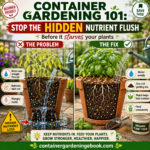
Imagine it is a hot summer afternoon on your patio. Your potted tomatoes or fresh basil look a bit wilted, so you give them a deep drink of water until it pours out the bottom drainage holes. You feel like a great plant parent, but a week later, you notice pale yellow leaves after watering. You might think you have a black thumb, but your plants are actually suffering from a container gardening nutrient flush. This hidden issue occurs when daily summer watering accidentally strips the vital food right out of your pots.
Affiliate Disclosure: This post contains affiliate links. If you make a purchase through these links, I may earn a small commission at no extra cost to you. I only recommend products I believe will add value to your gardening journey. Thank you for your support!
THE CONTAINER GARDENING NUTRIENT FLUSH EXPLAINED
To understand the mechanics of a container gardening nutrient flush, also known as nutrient leaching in containers, we have to look inside your pot.
When practicing container gardening for beginners, you cannot use regular backyard dirt. It is too heavy, packs down like brick, and suffocates potted root systems. Instead, you use high-quality potting soil, which is actually a soilless mix typically made of coconut coir, peat moss, and perlite.
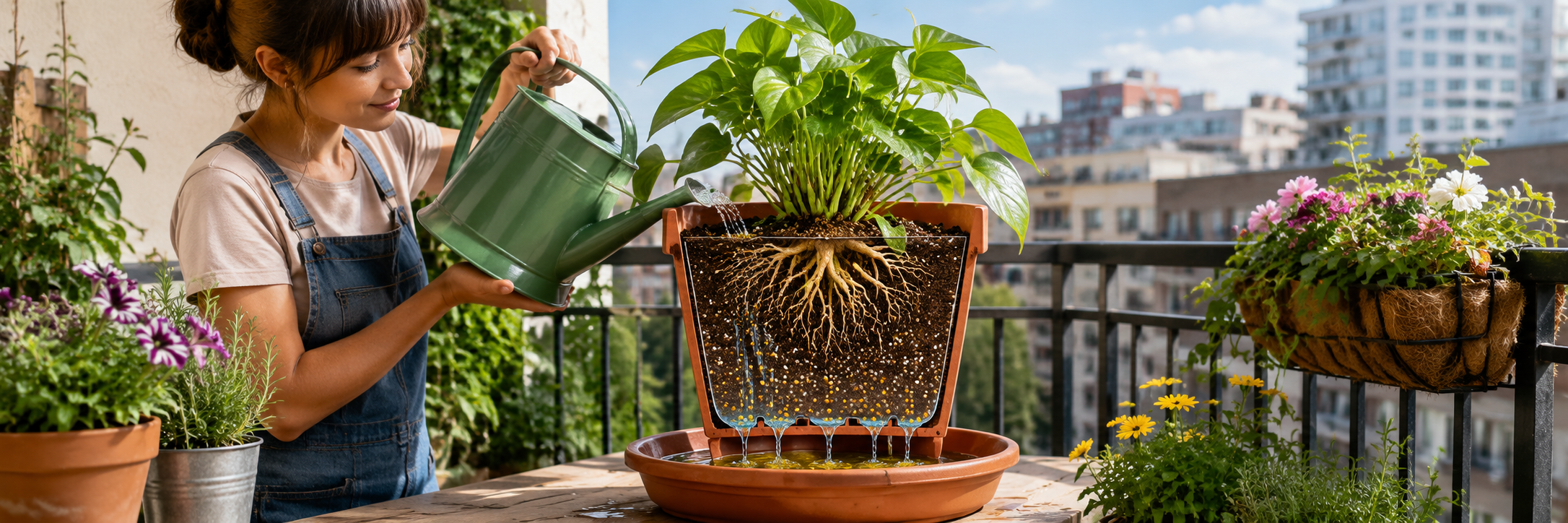
While this mix is phenomenal for root aeration and drainage, it possesses a major structural flaw: it lacks structural stickiness. Healthy ground soil acts like a magnet, grabbing onto plant food. Modern container gardening mixes, however, act more like a slippery water slide.
Because most popular store-bought plant foods dissolve instantly in liquid, heavy watering dissolves the plant food and carries it right out of the pot. When a container gardening nutrient flush becomes a daily occurrence due to summer heat, your plants quickly starve.
EXPERT INSIGHT FROM HORTICULTURAL RESEARCHERS
Top university scientists like Dr. Bruce Bugbee and Dr. Paul Fisher have extensively studied nutrient leaching in containers. Their research reveals that highly porous potting mixes have an incredibly low capacity to retain water-soluble nutrients. When you water heavily to combat summer heatwaves, you create an unintended container gardening nutrient flush that leaves your plant roots utterly starved of essential minerals like nitrogen.
BEGINNER SYMPTOMS CHECKLIST
Look out for these clear signs to see if fertilizer is actively washing out of your pots:
Symptom 1: Pale yellow leaves after watering, especially starting at the bottom of the plant.
Symptom 2: Stunted plant growth despite the plant getting full summer sunlight.
Symptom 3: Water rushing straight out of the bottom drainage holes almost instantly.
Symptom 4: A faded, pale green color across the entire plant instead of a vibrant hue.
TROUBLESHOOTING: CAUSE, EFFECT, AND FIX
Cause: Watering your pots too quickly with too much water volume all at once.
Effect: Water creates invisible paths down the inside edges of the container, bypassing the root system entirely while triggering a container gardening nutrient flush.
Fix: Adjust your watering speed by understanding slow versus fast watering. Fast watering floods the pot and triggers a total wash-out. Slow watering allows the potting mix to act like a sponge, absorbing the moisture, preventing a container gardening nutrient flush, and keeping the nutrients locked safely inside the root zone.
THREE BEGINNER-FRIENDLY WAYS TO PREVENT NUTRIENT FLUSH
Step 1: Switch to Nutrient Spoon-Feeding. Instead of giving your plants a massive meal of liquid fertilizer once a month, give them a tiny snack every single week. Cut the recommended dose on your liquid fertilizer bottle down to one-quarter strength, but use it more frequently. This simple adjustment actively stops a container gardening nutrient flush and ensures that a fresh snack is always waiting for the roots.
Step 2: Manage Your Leaching Fraction. The leaching fraction is the percentage of water that escapes the bottom of the pot relative to what you poured in. When watering your containers, pour slowly to prevent a container gardening nutrient flush. Your goal is for just a tiny trickle of water, about ten to fifteen percent of what you poured in, to peek out of the bottom holes.
Step 3: Add Molecular Anchors to Your Soil. Bypass the flaws of traditional soilless media by using structural components that trap water-soluble nutrients at a microscopic level before a container gardening nutrient flush can sweep them away.
ANTI-FLUSH POTTING MIX BLUEPRINT
To build the ultimate defense against nutrient loss, try our custom recipe: Mix forty percent coconut coir, thirty percent perlite, twenty percent organic worm castings, and ten percent compost. The worm castings act like an electrical magnet to hold onto your fertilizer inputs. For a complete breakdown of tailored substrate blueprints for different plant types, visit our
Potting Mix Finder
A SIMPLE SUMMER WATERING SCHEDULE FOR BEGINNERS
Keep your plants fed and hydrated with this easy weekly routine:
Monday: Slow water with pure water until a small trickle exits the bottom.
Wednesday: Check the top two inches of soil with your finger. If dry, slow water again.
Friday: Spoon-feeding day. Add one-quarter-strength liquid fertilizer to your water and pour slowly.
Sunday: Rest and check your lower leaves for any signs of a container gardening nutrient flush.
RECOMMENDED CONTAINER GARDENING PRODUCTS FOR SUCCESS
Rosy Soil: Traditional potting soils allow nutrients to rinse straight through. Rosy Soil features sustainable biochar, which acts as an absolute magnet for water-soluble plant food, successfully halting the container gardening nutrient flush. Order your mix here: Rosy Soil
Garden Tower: If you want to eliminate the container gardening nutrient flush entirely, the Garden Tower uses a brilliant vertical composting design that recycles water and nutrients internally through a central worm core. Learn more here: Garden Tower
Perfect Plants: Sourcing the right containers and amendments is easy with Perfect Plants, your online source for premium pots, drainage soils, and professional gardening supplies designed to block a container gardening nutrient flush. Shop their collection here: Perfect Plants
Botanical Interests: High-quality seeds handle summer heat stress much better without succumbing to a container gardening nutrient flush. Botanical Interests offers premium herb, vegetable, and flower seeds with beautiful packets and foolproof instructions for complete beginners. Grab your seeds here: Botanical Interests
FREQUENTLY ASKED QUESTIONS
Question: What exactly is a container gardening nutrient flush?
Answer: A container gardening nutrient flush happens when frequent summer watering dissolves water-soluble fertilizers and washes them completely out of the bottom drainage holes of your pots before the plant can use them.
Question: Why do my plants develop yellow leaves after watering?
Answer: When a container gardening nutrient flush is constantly washing fertilizer out of pots, your plants run out of nitrogen. This structural starvation causes the older, bottom leaves to turn pale yellow as the plant tries to relocate remaining nutrients to new growth.
Question: How can I prevent nutrient leaching in containers?
Answer: You can prevent this by watering your plants much slower, switching to a slow-release organic fertilizer, adding biochar or worm castings to your soil mix to stop a container gardening nutrient flush, or using self-watering planters.
Question: Do self-watering pots prevent a container gardening nutrient flush?
Answer: Yes. Because self-watering pots deliver moisture from the bottom up via a closed reservoir, there are no drainage holes at the very bottom for the fertilizer to wash out of. The nutrients stay locked inside the system.
Growing your own fresh food or beautiful flowers on a small patio or balcony is deeply rewarding. Once you know how to master your water speed and protect your soil inputs against a container gardening nutrient flush, your garden will thrive. Discover more simple, jargon-free plant care strategies on our Container Gardening Blog at https://containergardeningebook.com/blog
Leave a Reply